
The California Nebula: A Cosmic Oasis
Have you ever considered a California getaway, but in space? Welcome to the California Nebula, also known as NGC 1499. This celestial wonder, reminiscent of the shape of the Golden State, is a must-see destination for astronomers and astronomy enthusiasts. Join us on a guided tour of the California Nebula and discover its most fascinating scientific anecdotes.
A State of Stars
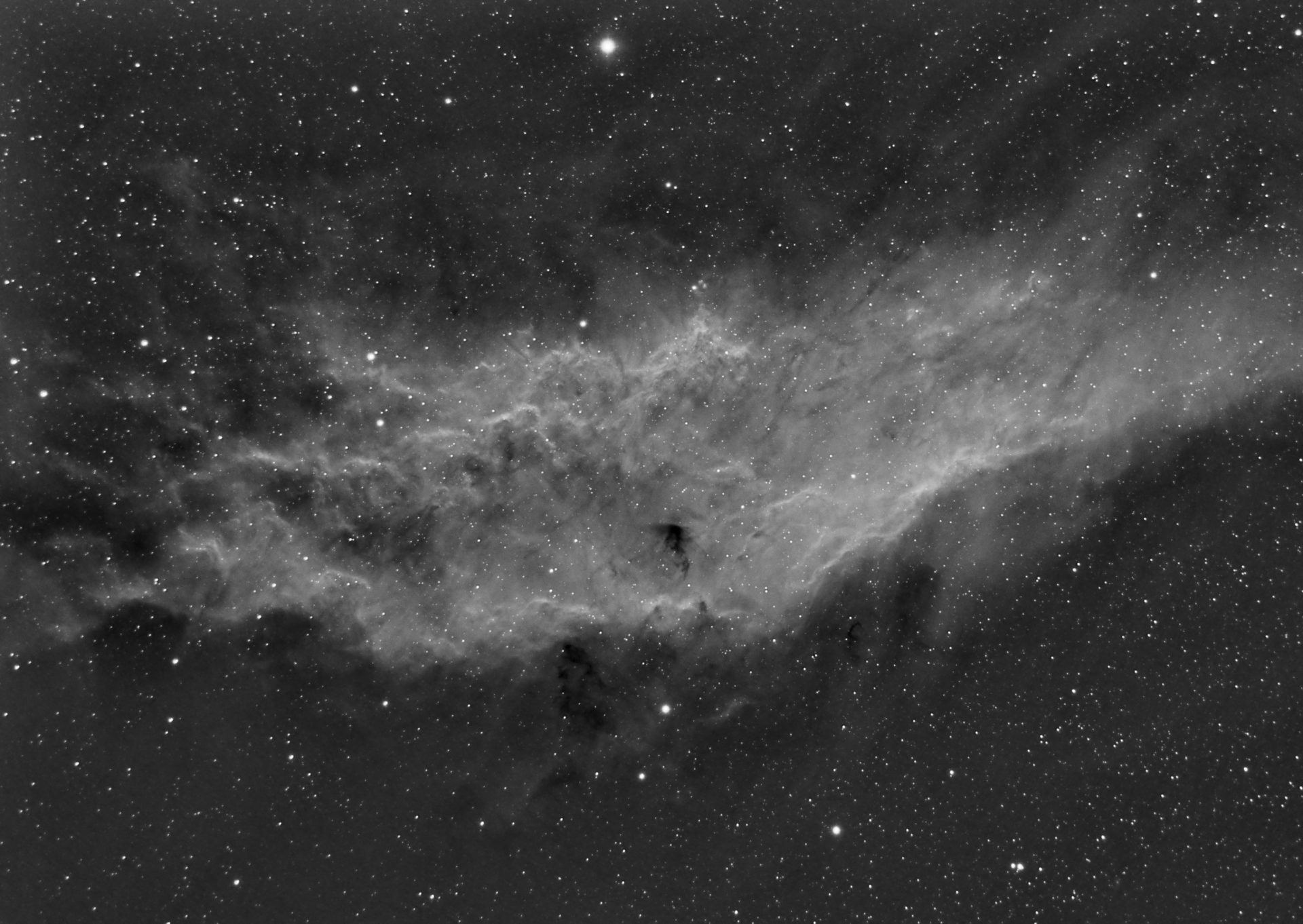
The California Nebula lies about 1,000 light-years from Earth, in the constellation Perseus. Its name derives from its resemblance to the map of the state of California, an astonishing example of how the human imagination interprets celestial shapes.
A Celestial Cinema Screen
The California Nebula is an emission nebula, meaning it emits its own light. It lies in the same line of sight as the bright star Xi Persei, which illuminates the nebula and makes it a dazzling spectacle to observe. It’s as if the nebula were a celestial movie screen, onto which the lights of the stars are projected.
A Mystery of Brightness
Despite its apparent brilliance in astronomical photographs, the California Nebula is almost invisible to the naked eye. This contrast has long puzzled astronomers. It is now thought that the nebula is simply too spread out to be easily detected by the human eye. However, with the help of a telescope and long photographic exposures, this dazzling nebula can be revealed in all its glory.
A Cradle of Stars
The California Nebula is an active site of star formation. The dark regions inside the nebula are dense clouds of gas and dust, where new stars are being born. This makes the California Nebula a natural laboratory for the study of star formation and evolution.
The California Nebula reminds us that the universe is a place of constant wonder and surprise. Whether you’re a seasoned astronomer or a curious novice, there’s always something new to discover in the night sky. Join us as we continue to explore these celestial wonders and discover the secrets of our fascinating universe.


