Introduction
Imagine owning a real piece of Mars. A Martian meteorite is exactly that: a fragment torn from the Red Planet. After a long journey through space, it ends up on Earth. These rare and fascinating stones attract researchers and collectors alike. They tell the story of Martian volcanism and its evolution. In this article, find out more about their origins, their history and their families, as well as a concrete example with the Amgala meteorite.
Origin and arrival of Martian meteorites
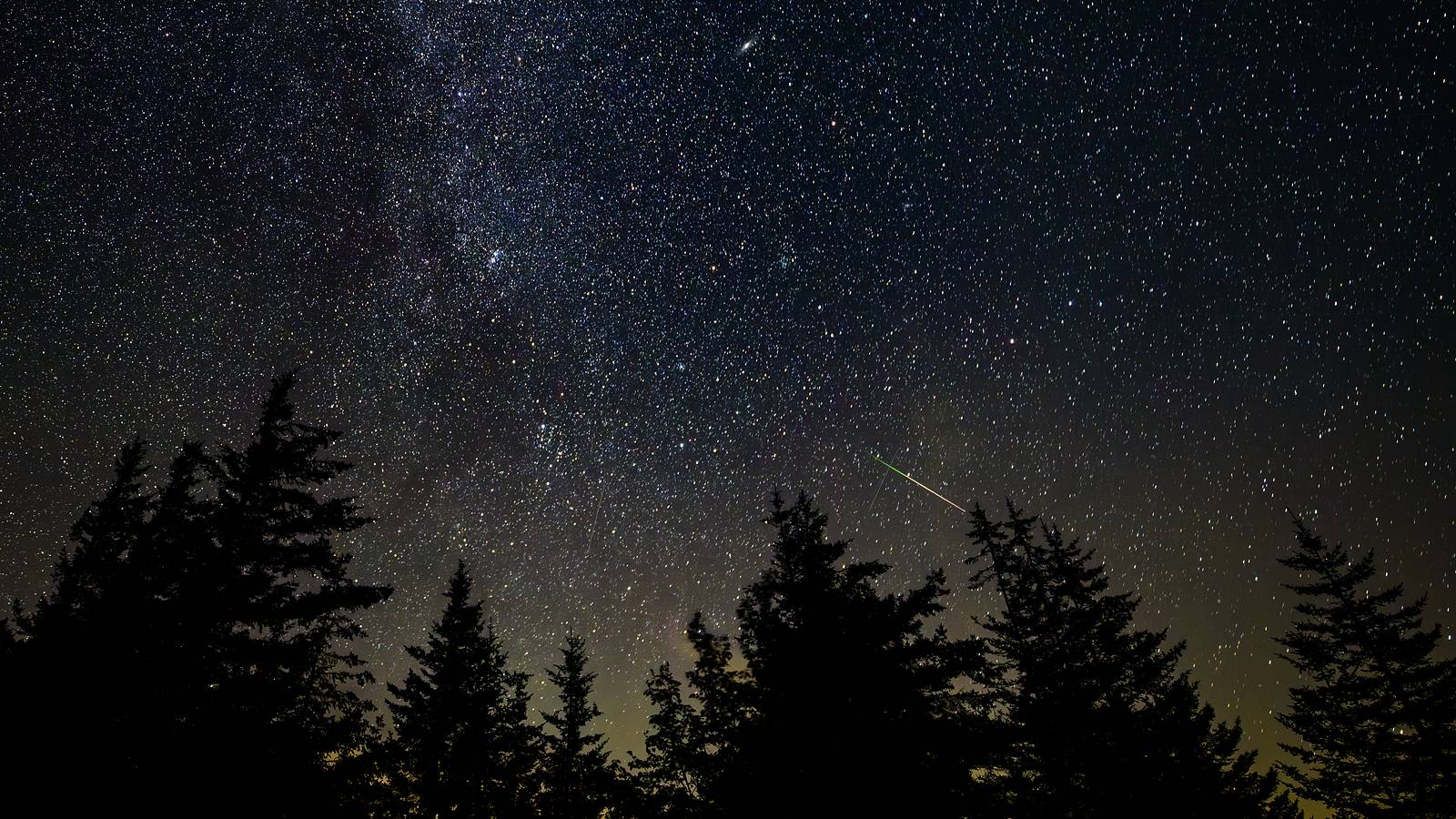
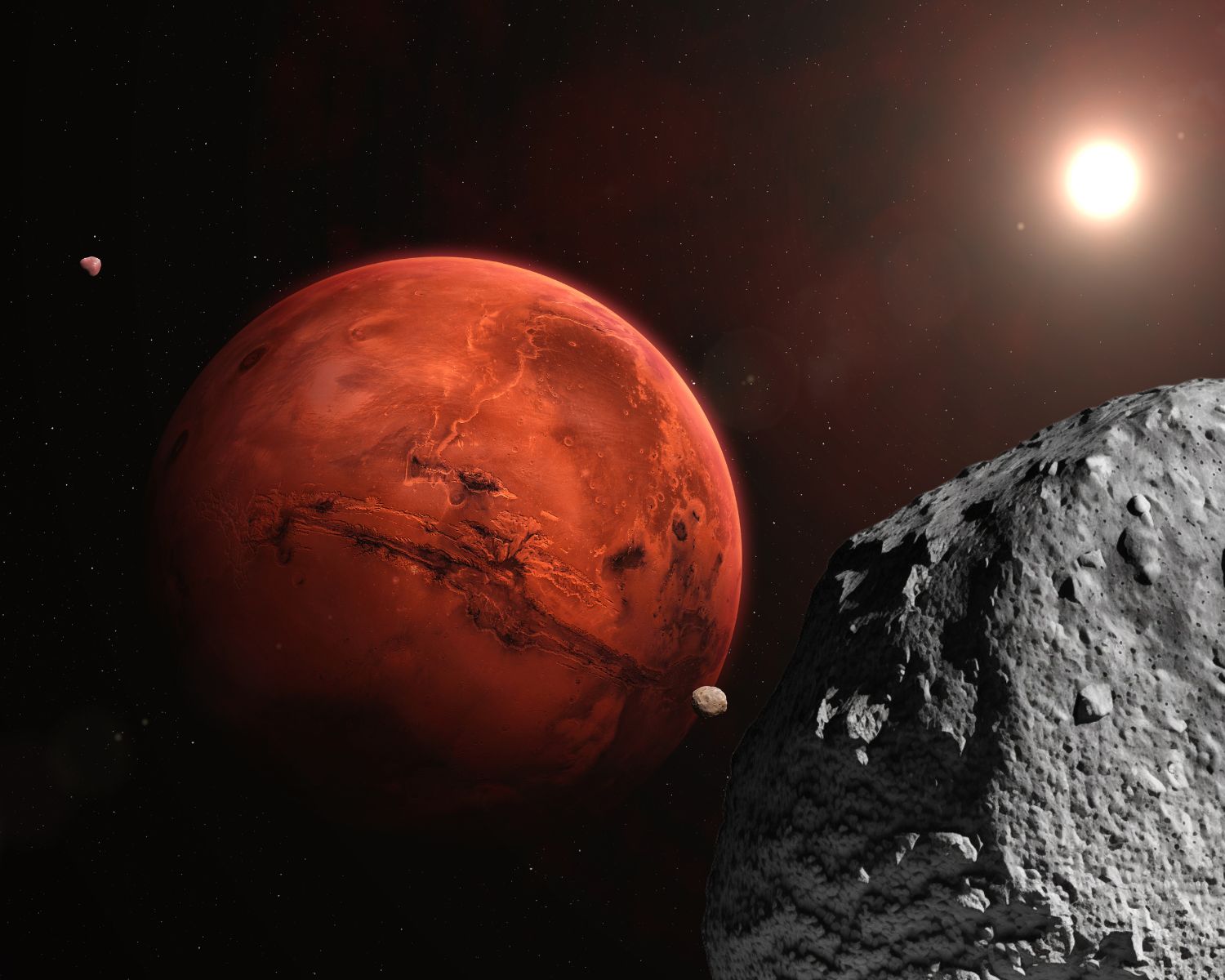
A Martian meteorite is created when an asteroid hits Mars with colossal energy. The impact throws fragments of crust into space. These rocks then wander around the Sun for millions of years. When they cross the Earth, gravity pulls them in and they enter the atmosphere. The surface heats up, partially melts and forms a black fusion crust. Eventually, the rock reaches the ground and becomes a meteorite.
Preferred discovery areas
Deserts and ice caps are the best places to find them. The contrast with the environment makes meteorites more visible. The Sahara, Oman and Antarctica have yielded the majority of known specimens. To date, only around 400 Martian fragments have been recorded, representing less than 0.5% of all meteorites discovered. This exceptional rarity explains their high value.
Observed falls
Very few falls have been seen directly. The most famous recent example is the Tissint meteorite, which fell in Morocco in 2011. The fireball was observed and fresh fragments were quickly collected. Most other Martian specimens are identified long after their fall, sometimes several years later.
How do you recognize a Martian meteorite?
At first glance, these rocks look like simple pebbles. However, laboratory analysis reveals their origin. In the 1980s, a study of EETA 79001 shergottite revealed the presence of trapped gases.
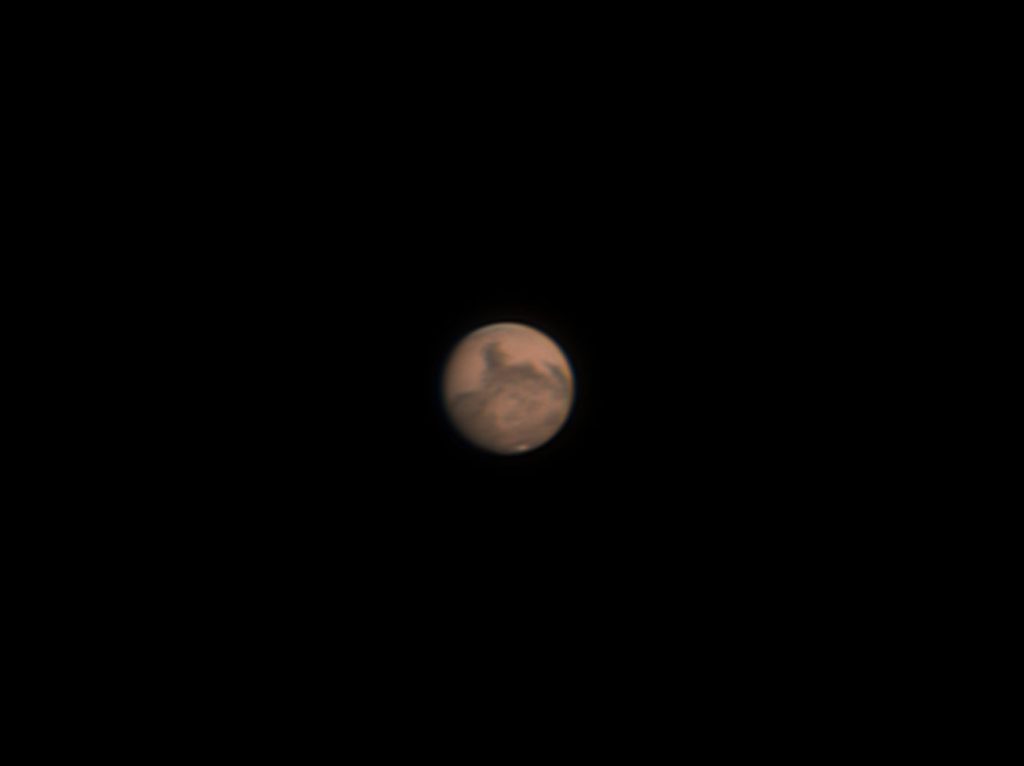
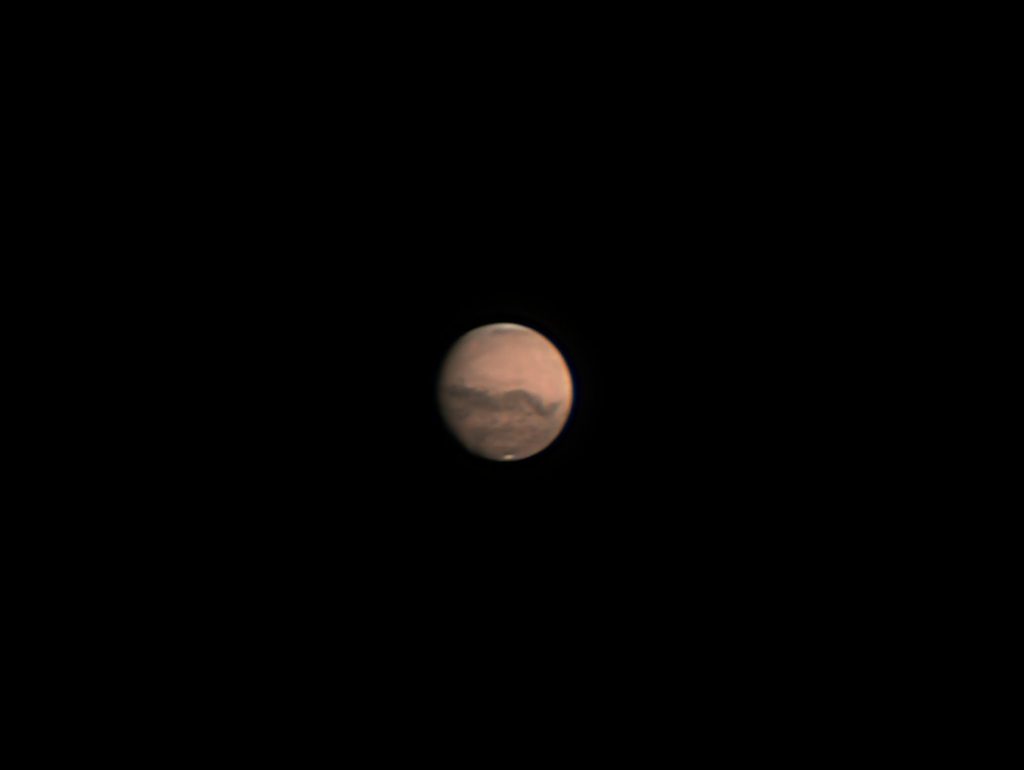
Their composition corresponded perfectly to the Mars atmosphere measured by the Viking probes in 1976. This result ruled out terrestrial contamination. The conclusion was clear: this rock did indeed come from Mars. Other evidence completed the picture, such as the isotopic composition of oxygen, distinct from that of lunar or asteroidal meteorites. Data from Mars rovers and satellites confirm these results. Thanks to these unique signatures, scientists can unambiguously identify a Martian meteorite.
Classification and composition of Martian meteorites
Martian meteorites are magmatic rocks derived from the crust of Mars. They come from solidified lavas or volcanic rocks. Their composition includes minerals such as pyroxenes,olivine and feldspars (maskelynite). Their surface has a dark crust vitrified by atmospheric entry, while the interior often has a grey-green appearance punctuated by crystals.
The three main families (CNS)
Martian meteorites are grouped together under the acronym SNC: Shergottites, Nakhlites and Chassignites.
Shergottites: these account for around 75% of Martian meteorites. They are iron- and magnesium-rich basalts or gabbros. Some dates indicate a “young” age of 150 to 300 million years, proof of prolonged Martian volcanism.
Nakhlites: rarer, they come from 1.3 billion-year-old lava. They show traces of interaction with water.
Chassignites: extremely rare, they are dominated by olivine and also date back around 1.3 billion years.
Famous examples
Some meteorites don’t fit into these categories. Meteorite ALH 84001, found in Antarctica in 1984, is a 4-billion-year-old orthopyroxenite. In 1996, it sparked controversy over possible Martian microfossils. Another example, NWA 7034, nicknamed Black Beauty, discovered in 2011, is a unique breccia containing very ancient fragments of water-rich Martian crust.
Case in point: Amgala 001
Among recent discoveries, Amgala 001 perfectly illustrates a shergottite. It was found in December 2022 in the Western Sahara, near Meharrize. Local researchers collected around 35 kg of fragments, including a 5.2 kg boulder. In 2023, it was officially classified as a Martian meteorite.
Description and features
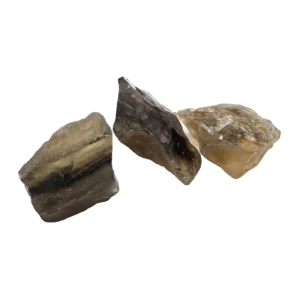
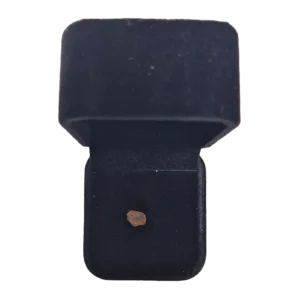
Its brownish-black outer crust is slightly bumpy. The interior is grey-green, with numerous olivine crystals visible to the naked eye. Light-colored veins, formed by fusion during the impact on Mars, streak the rock. These details confirm that it belongs to the shergottite group. Today, we offer Amgala 001 fragments on our website, delivered with a certificate of authenticity.
Rarity and value of Martian meteorites
Martian meteorites are extremely rare. Their total known mass is just a few hundred kilograms. International demand is strong, and their price varies according to several criteria: weight, state of preservation, provenance or classification. Small fragments are already selling for several hundred euros per gram. In 2023, a 14.5 kg Martian boulder, named NWA 16788, was estimated at between $2 and $4 million at auction. To acquire a Martian meteorite is to invest in a unique scientific and collector’s item.
Our Martian meteorites in frames and jewelry
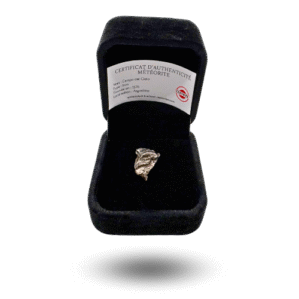
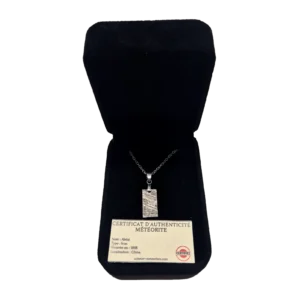
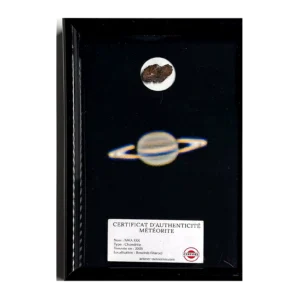
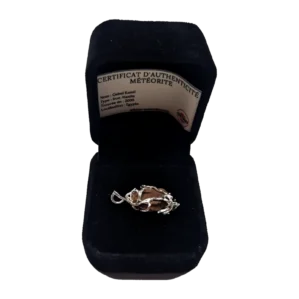
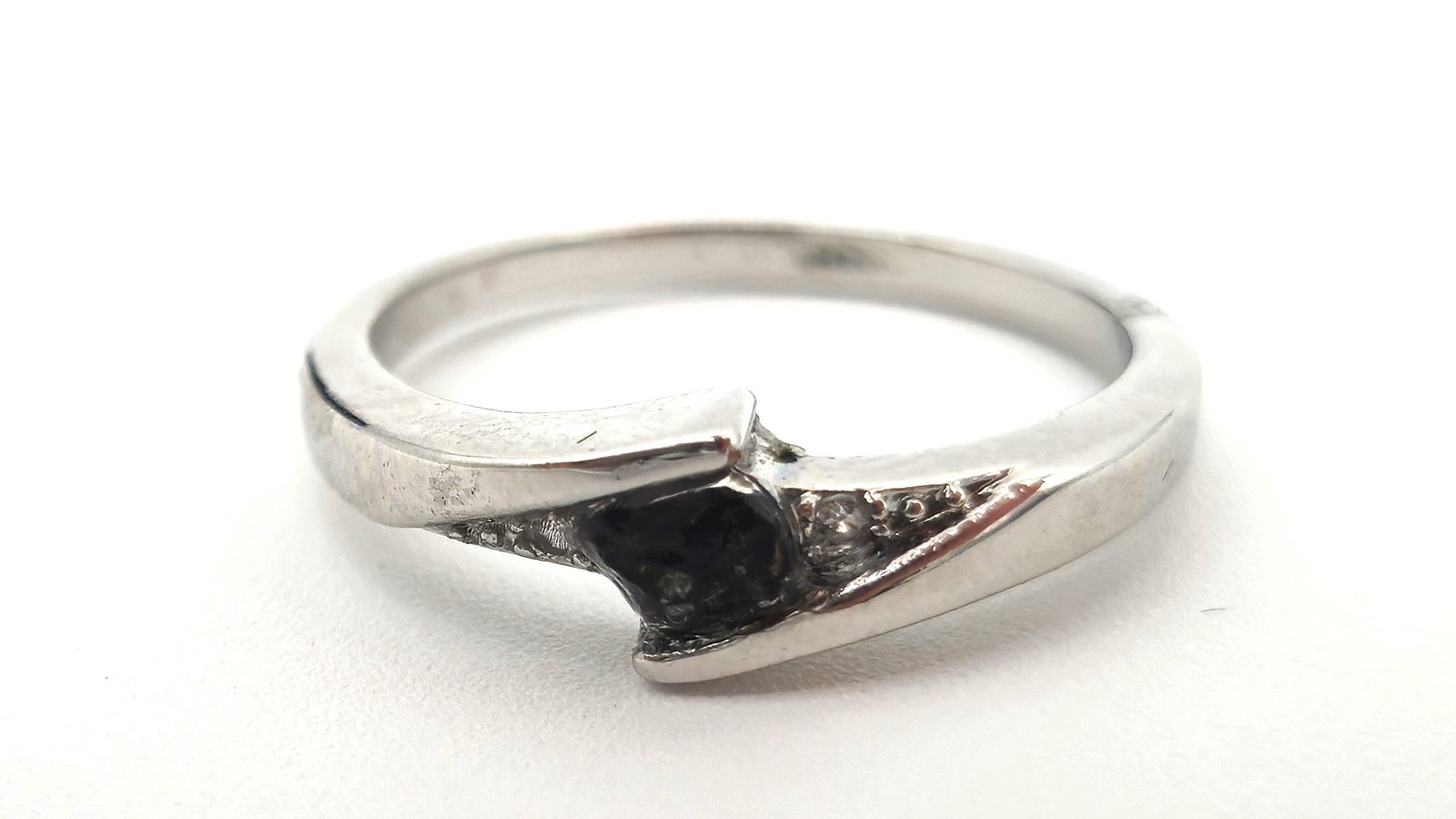
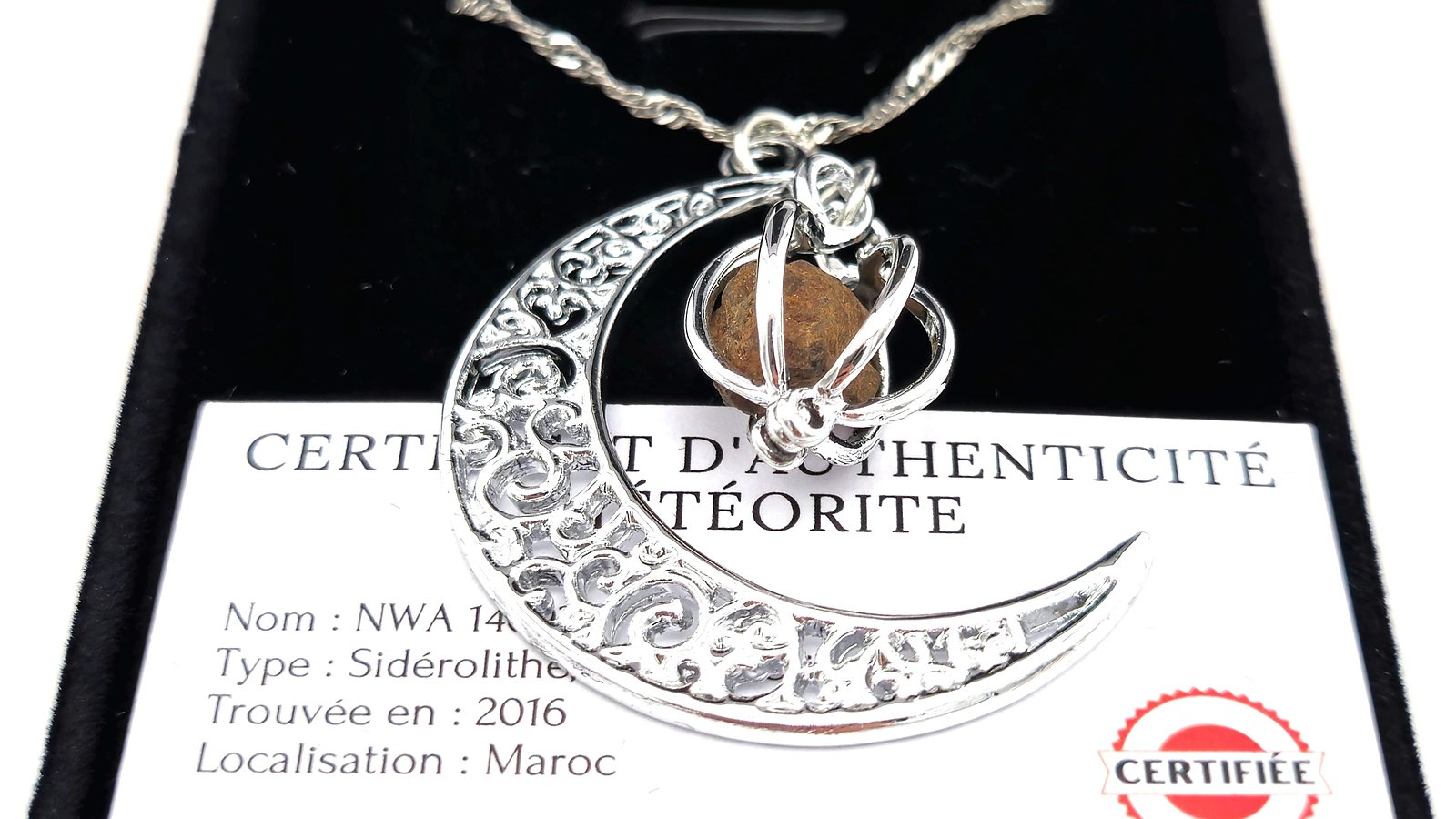
On our site, you can buy framed Martian meteorites, including fragments of Amgala 001 or 003. Each frame comes with a detailed description and certificate of authenticity. Our workshop is also preparing a collection of Martian jewelry including rings, pendants and necklaces. These exclusive creations will be available soon. So you can wear an authentic piece of Mars.
FAQ Martian meteorite
A rock from Mars, ejected by an impact and falling to Earth.
Thanks to isotope analyses and the presence of gases identical to the Martian atmosphere.
Prices range from hundreds to thousands of euros per gram, depending on quality and rarity.
Frames containing fragments of Amgala and exclusive Martian jewelry.