Meteorites have always fascinated people. But where does a meteorite come from? It’s a question that fascinates scientists and collectors alike. In this article, we explore theorigins of meteorites: their formation, their journey through space and their fall to Earth.
What is meteorite origin?
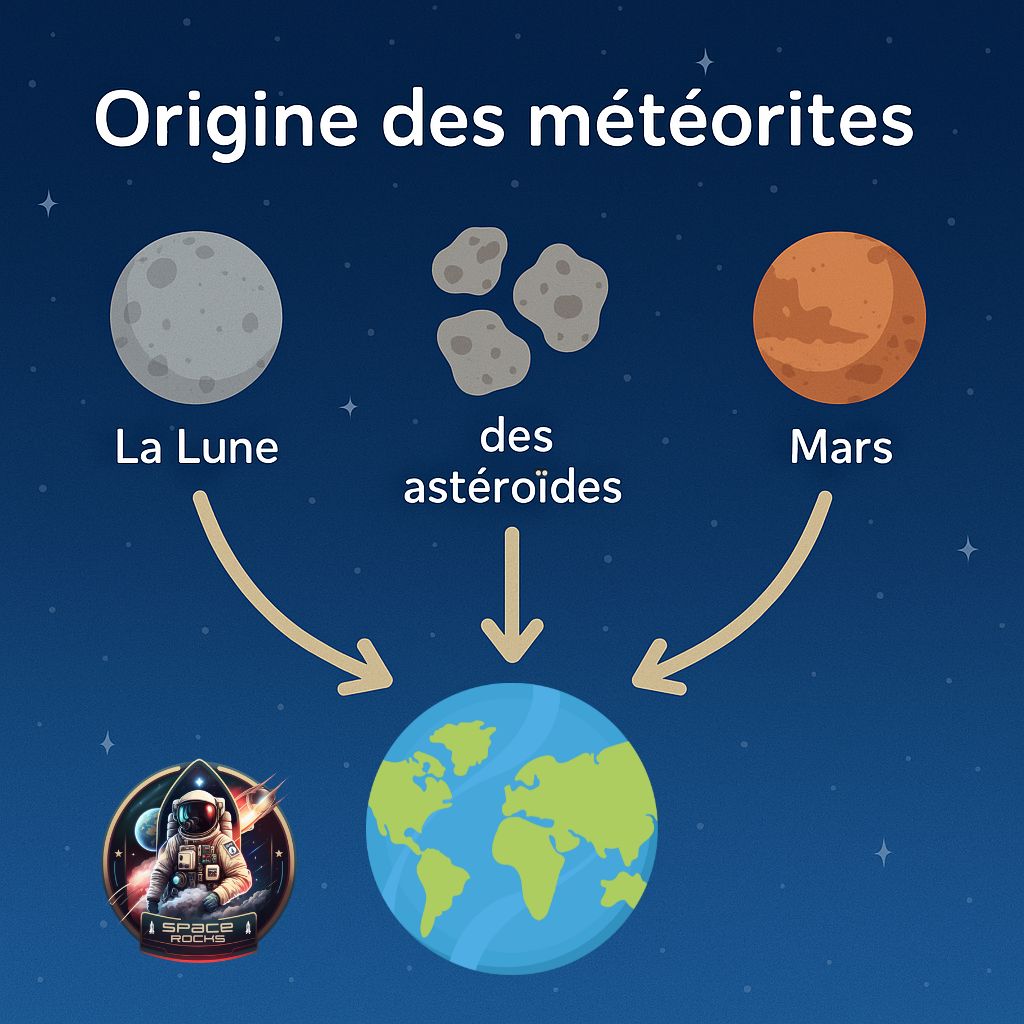
Meteorite origin refers to the star from which it comes. It can be :
an asteroid,
the Moon,
the planet Mars,
or even a comet in very rare cases.
Understanding this origin will help us to better understand the formation of the Solar System.
Meteorite origin: asteroids (99% of cases)
The vast majority of meteorites come from the asteroid belt. This zone, located between Mars and Jupiter, contains millions of small rocky bodies. When they collide, they release fragments. These fragments become meteoroids. They can then cross the Earth’s orbit.
Types of asteroidal meteorites
Chondrites: primitive stony meteorites.
Siderites: composed almost entirely of iron and nickel.
Achondrites: derived from the differentiated crusts of more massive asteroids.
Example: Campo del Cielo
This iron meteorite fell in Argentina. It comes from the core of a differentiated asteroid.
Meteorite origin: Mars
Some meteorites come from Mars. During a major impact, rocks are thrown into space. If they escape Martian gravity, they become meteoroids. Around 0.1% of meteorites found on Earth are Martian.
How to recognize them?
The gases trapped inside have the same composition as Mars’ atmosphere.
Example: Amgala 001
Found in the Sahara in 2022. Weighs 35 kg. It’s shergottite, a Martian volcanic rock.
Meteorite origin: the Moon
Lunar meteorites are rare. But they do exist. Huge impacts on the Moon’s surface can eject fragments. If these fragments escape the lunar attraction, they can reach the Earth.
How do you identify them?
Their mineral composition is identical to the lunar samples brought back by the Apollo missions.
Example: Laâyoune 003
Discovered in Morocco in 2022. This meteorite features a feldspathic breccia typical of the Moon.
Meteorites of cometary origin?
Some theories envisage a cometary origin. But no known meteorite has been formally linked to a comet. Cometary debris is too fragile to survive atmospheric passage.
How are meteorites formed?
It all begins in the dust disk around the Sun. Grains accrete. They form bodies called planetesimals. Some melt and differentiate. Others remain crude. When they break up, their fragments become meteorites.
Space travel to Earth
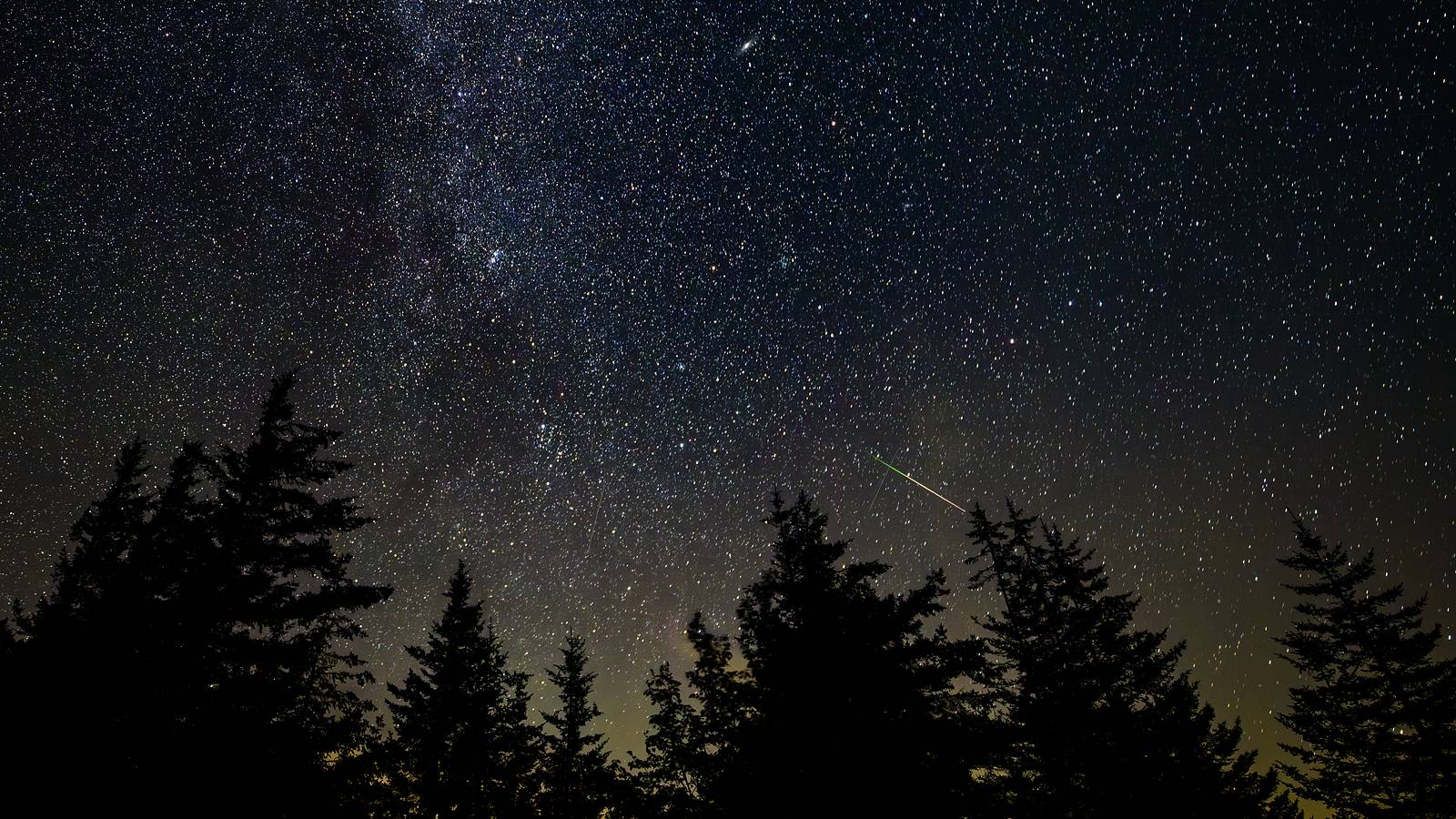
A meteorite sometimes takes millions of years to reach the Earth. Its trajectory crosses that of our planet. It enters the atmosphere at high speed. Most of it burns up. But a fragment may survive and fall to the ground.
How do you know where a meteorite comes from?
The researchers analyze :
chemical composition,
oxygen isotopes,
mineral structure.
Each star has a unique signature. This makes it possible to trace the meteorite’s origin with precision.
Buy a genuine meteorite
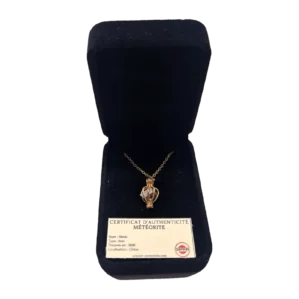
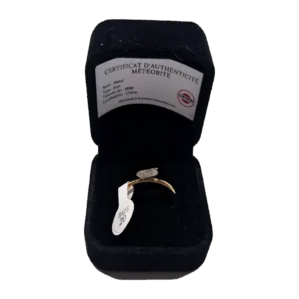
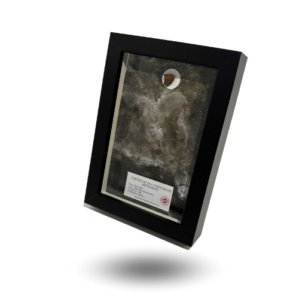
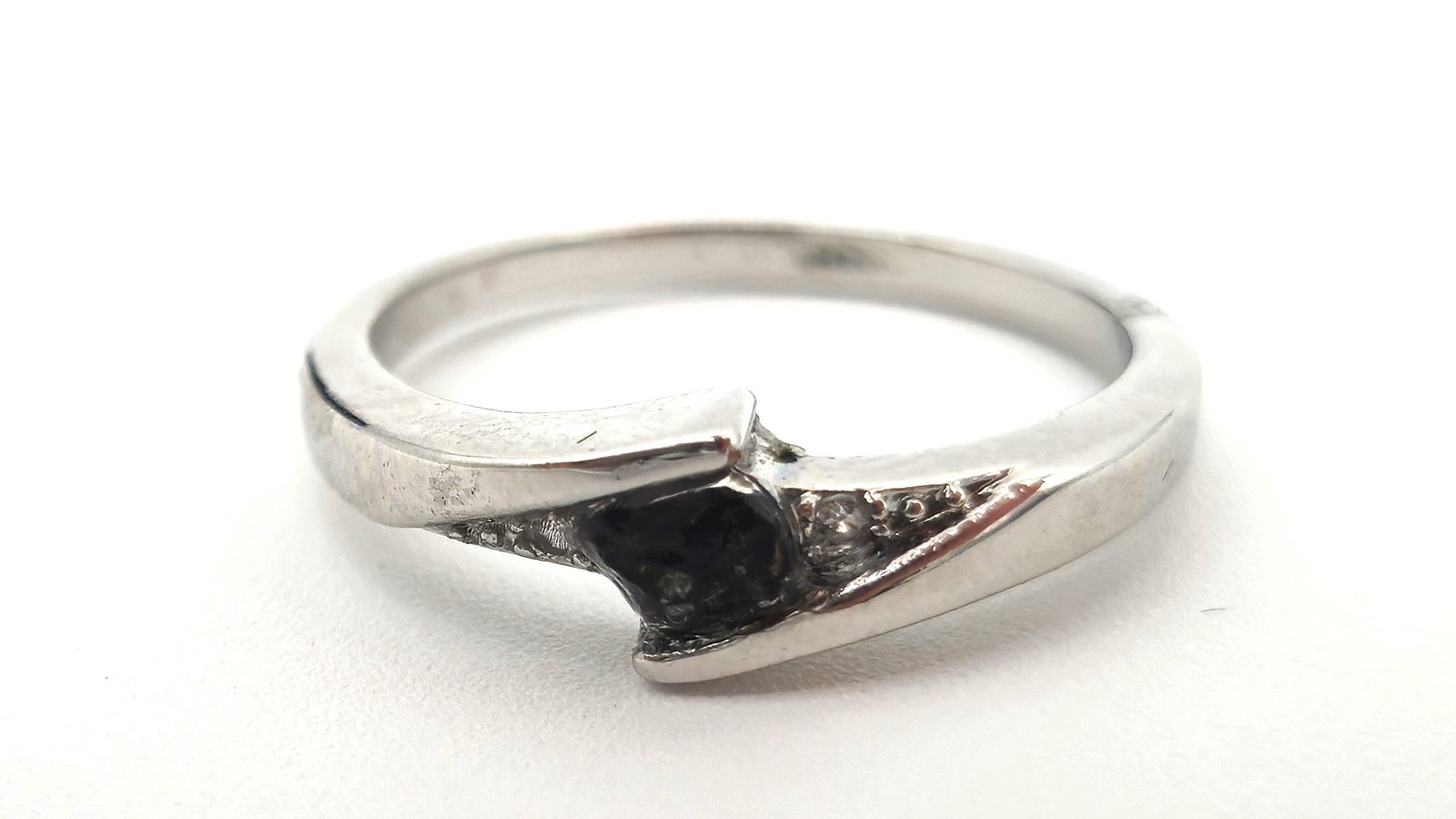
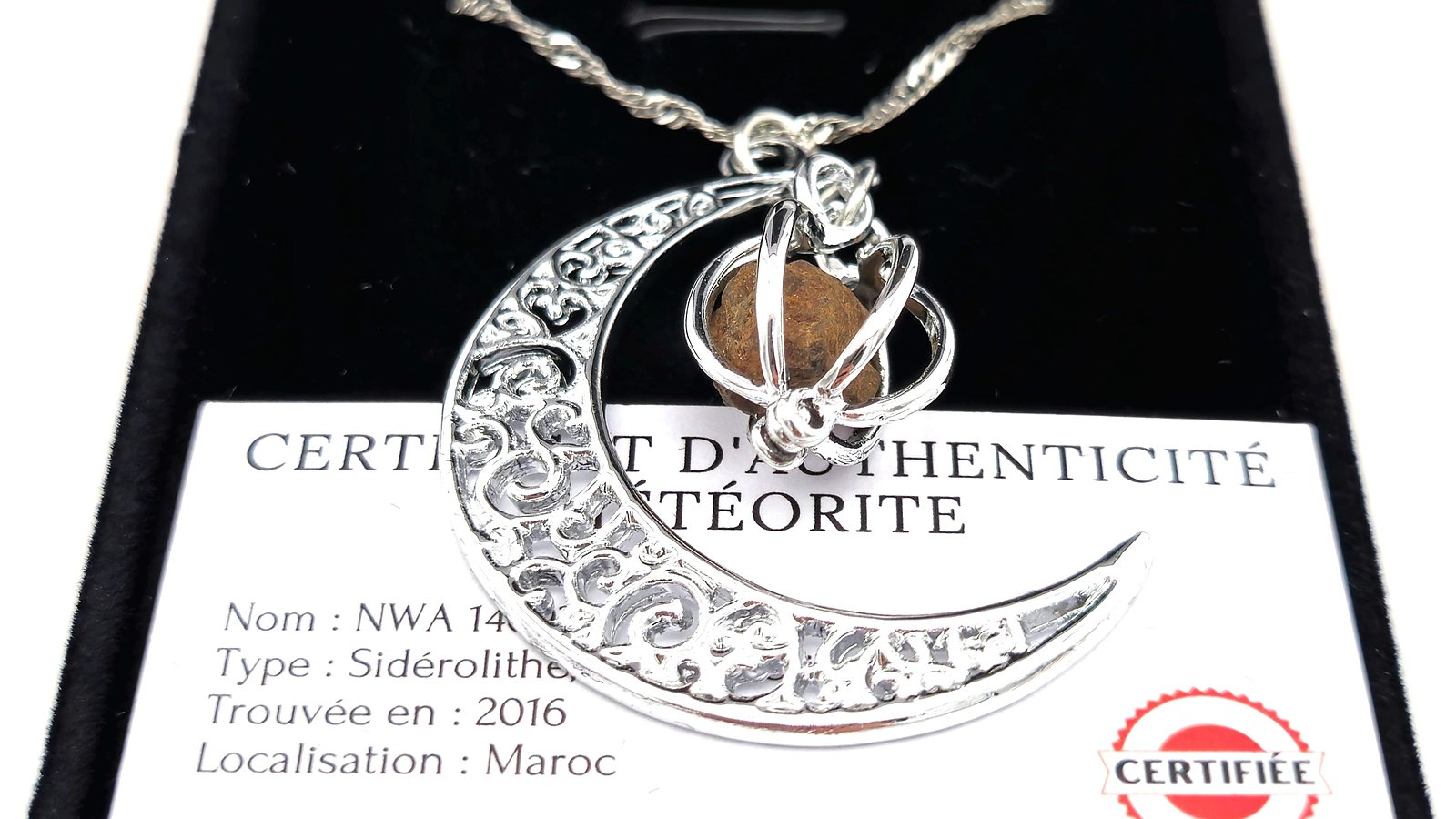
You can own a real fragment from outer space. On acheter-meteorites.com, the Space Rocks brand offers certified meteorites. Each meteorite sold is analyzed, traceable and accompanied by a certificate.
Conclusion
Meteorite origin can be Martian, lunar or asteroidal. Each fragment tells a cosmic story. By analyzing it, we can retrace its journey to Earth. For enthusiasts, these space rocks are much more than just rocks. They are traces of the Universe that you can hold in your hands.