When choosing a meteorite ring, the first consideration is how the meteorite is incorporated into the design: a raw fragment set into the band, a strip of meteorite metal inlaid into the band, or a stone (chondrite, lunar meteorite) mounted like a gem. Next, check the size, the material of the ring, and whether it comes with a certificate identifying the meteorite.
Wearing a piece of metal on your finger that formed 4.5 billion years ago at the core of an asteroid—that’s the appeal of a meteorite ring. But you still need to know your way around the different styles, types of meteorites, and “meteorite-effect” jewelry that doesn’t contain a single gram of the real thing. This guide covers what really matters before you buy.
Three Ways to Wear a Meteorite on Your Finger
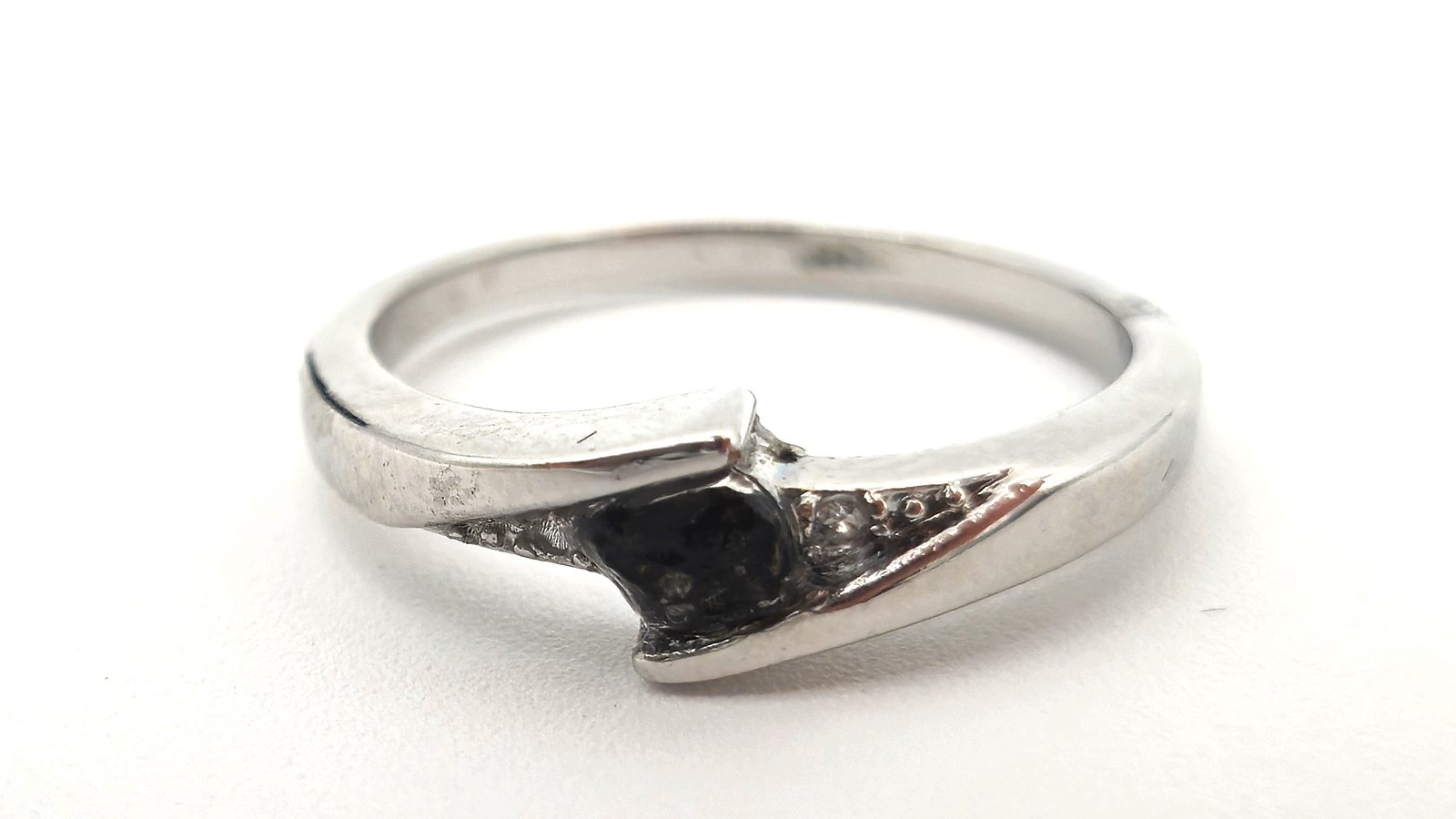
The rough stone set in a setting
A small fragment of a meteorite, left in its natural state, is set into the ring. This is the most “cosmic” style: you can see the material just as it fell, with its rough edges and patina. Campo del Cielo, an iron meteorite that fell in Argentina about 4,000 years ago, is particularly well-suited for this purpose.
The Inlaid Strip
A thin strip of iron meteorite is inlaid into the ring, either around its entire circumference or along part of it. The design is more understated, almost classic, and the meteorite is an integral part of the ring’s design. This is the case with our models featuring a strip of Aletai, a meteorite discovered in 1898 in Xinjiang, China. When polished and etched with acid, certain iron meteorites reveal a network of intersecting lines: Widmanstätten patterns, which no terrestrial metal produces naturally.
A stone set like a gem
Not all meteorites are metallic. Chondrites, the most common type, are dark stones dotted with small, light-colored inclusions; lunar meteorites are rocks torn from the Moon. Set in a bezel, they are worn like a semi-precious stone—but with a history that is far more breathtaking.
Which meteorite should you choose for a ring?
Meteorite
Type
What You See
For whom
Campo del Cielo (Argentina)
Iron, octahedrite
Dark gray raw metal, pronounced texture
For those who appreciate raw specimens and history (known since 1576)
Aletai (China)
Iron, Group IIIE
Metallic luster, textured surface
Lovers of clean lines
NWA 13290 (Algeria)
Ordinary chondrite H6
Dark stone with small light-colored inclusions
For those who prefer a stone to a metal
Unclassified Sahara chondrite
Chondrite
Brown to black stone, sometimes speckled with metal
Your first piece of meteorite jewelry, at an affordable price
Laâyoune 003 (Sahara)
Lunar meteorite
Rock from the Moon
Space enthusiasts, for a rare piece
Each one has its own story: we tell the storyof Aletai and that of chondrites in separate articles.
A meteorite ring for men or women?
Most meteorite rings are unisex. Signet rings and wide bands with inlaid stones are often chosen by men; thin rings, “princess-style” designs, or those adorned with a small fragment are more popular with women. But the real question is this: does the person tend to wear stainless steel, gold-tone, understated, or eye-catching jewelry? Start with what they already wear.
Finding the Right Size
In France, a ring size corresponds to the circumference of the finger in millimeters: a size 54 has an inner circumference of 54 mm. To measure it:
Wrap a strip of paper around your finger at the end of the day (your fingers swell slightly);
mark where the strip meets and measure the length when laid flat—that’s your size;
Or measure the inside diameter of a ring that fits well and multiply it by 3.14.
Make sure the ring fits over your knuckle. A ring with an inlaid band generally cannot be resized: take the time to measure carefully, and contact us if you have any questions.
The material of the ring
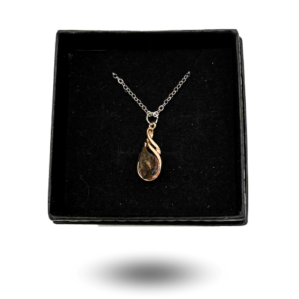
The ring holds the meteorite and withstands the bumps and scrapes of everyday life. Our rings are made of stainless steel or silver- or black-colored metal, depending on the model: the product description for each item specifies the material. Stainless steel is durable and well-tolerated by most skin types. The meteorite, meanwhile, remains the same regardless of the setting.
Caring for Your Ring
An iron meteorite contains iron and nickel: if exposed to moisture, sweat, or salt for a long time, it may develop small spots of rust. Best practices: Remove the ring before showering, swimming in the ocean or pool, or doing housework; dry it after contact with water; and store it in a dry place. Everything is detailed in our guide to caring for meteorite jewelry.
How much does a meteorite ring cost?
In our collection, most rings range from €60 to €80, and a ring set with a lunar meteorite costs around €150. Jewelry makers who set wide strips of meteorite into gold or platinum command much higher prices. Conversely, a “meteorite ring” selling for just a few euros on an online marketplace almost never contains any meteorite: always ask for the name of the meteorite used and a certificate of authenticity.
Frequently Asked Questions
Does a meteorite ring rust?
An iron meteorite can rust if it remains damp. If worn with a few precautions (removed before showering or swimming, dried, and stored in a dry place), it will retain its appearance. Chondrites and lunar meteorites contain little or no metal and are less susceptible to rust.
Is a meteorite ring magnetic?
A piece of an iron meteorite is attracted to a magnet, just like most meteorites. When set in a piece of jewelry, the effect is minimal and causes no inconvenience in everyday life.
How can you tell if a ring contains a real meteorite?
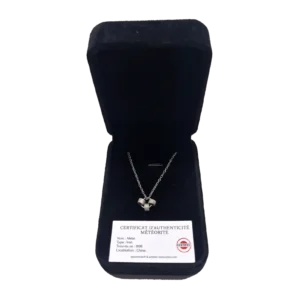
The seller must be able to identify the meteorite (Campo del Cielo, Aletai, NWA 13290, etc.) and provide a certificate that lists that name. A simple description such as “meteorite effect” or “meteorite pattern” often indicates a replica.
Can you choose a meteorite ring as a wedding band?
Yes, and it’s a powerful symbol. If you plan to wear it every day for years to come, choose a design in which the meteorite is embedded or protected, rather than a raised fragment that’s exposed to impacts.
When choosing a meteorite ring, the first consideration is how the meteorite is incorporated into the design: a raw fragment set into the band, a strip of meteorite metal inlaid into the band, or a stone (chondrite, lunar meteorite) mounted like a gem. Next, check the size, the material of the ring, and whether it comes with a certificate identifying the meteorite.
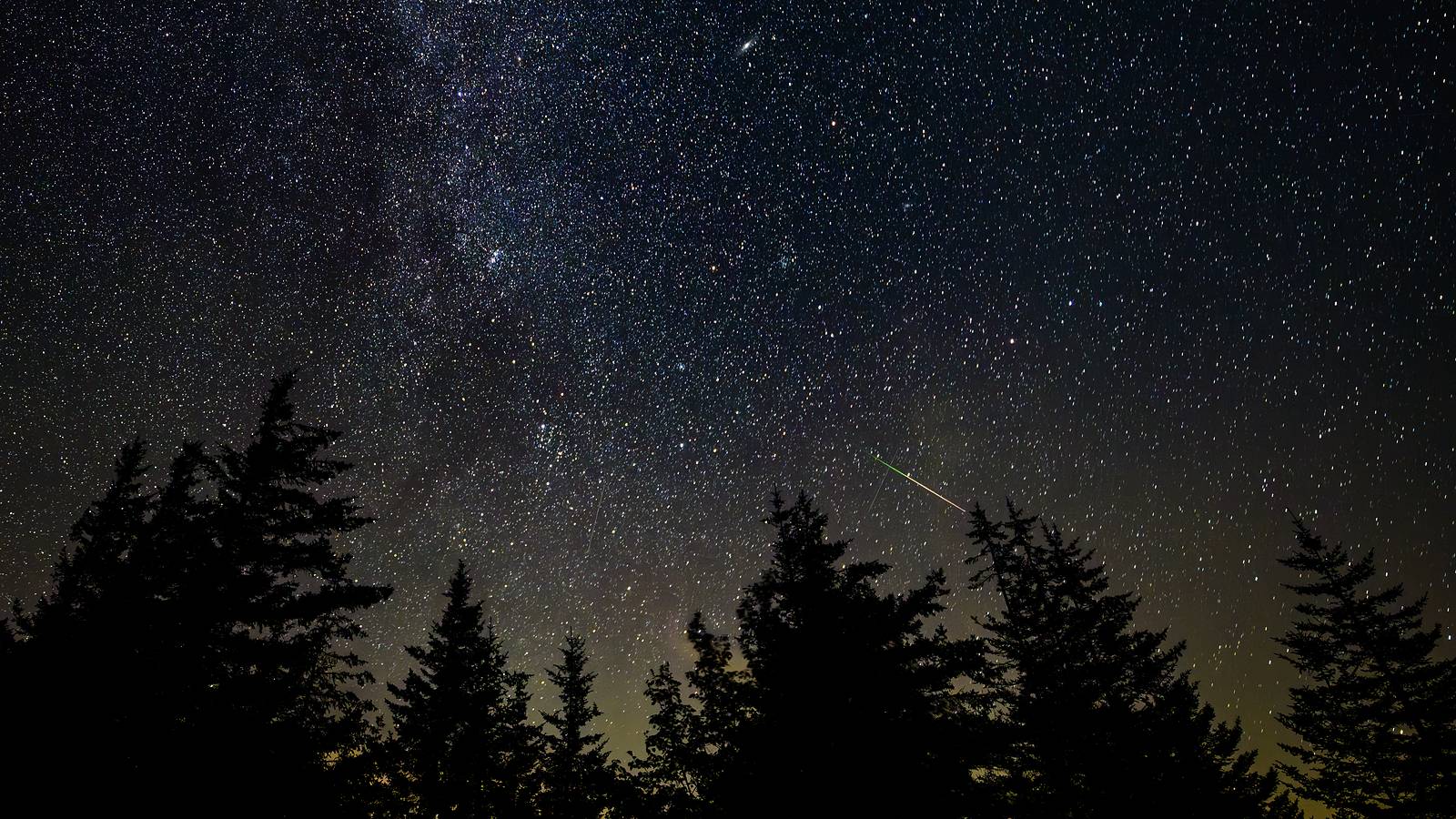
Major meteor showers return every year on the same dates: the Quadrantids in early January, the Lyrids in late April, the Perseids in mid-August, the Orionids in late October, the Leonids in mid-November, and the Geminids in mid-December—the most active of the year. To see them, look up on the night of their peak, after midnight, away from bright lights.
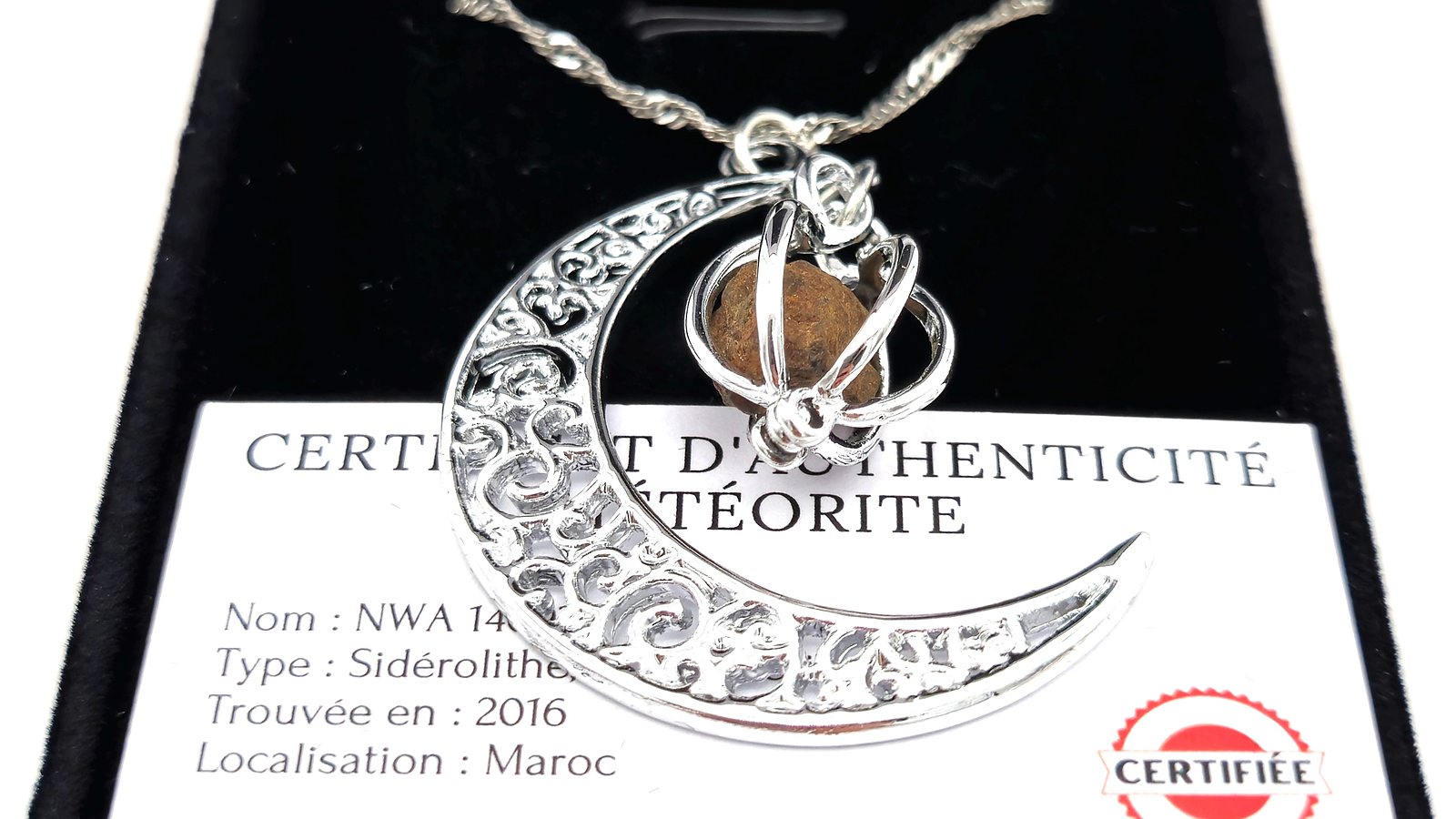
A meteorite certificate of authenticity must include the meteorite's official name, its classification, the location and date of its fall or discovery, the mass of the specimen, and the seller's identity. The name is then verified in the Meteoritical Society’s database: this is what links the specimen to an actual meteorite.
To provide the best possible experience, we use technologies such as cookies to store and/or access information on devices. Consent to these technologies will enable us to process data such as browsing behaviour or unique identifiers on this website. Failure to give consent, or withdrawal of consent, may adversely affect certain features and functions.
Functional
Always active
Storage or technical access is strictly necessary for the legitimate interest of enabling the use of a specific service explicitly requested by the subscriber or user, or for the sole purpose of transmitting a communication over an electronic communications network.
Preferences
Storage or technical access is necessary for the legitimate interest of storing preferences that are not requested by the subscriber or user.
Stats
Storage or technical access used exclusively for statistical purposes. Storage or technical access used exclusively for anonymous statistical purposes. In the absence of a court order, voluntary cooperation from your internet service provider or additional records from a third party, information stored or retrieved for this purpose alone cannot generally be used to identify you.
Marketing
Storage or technical access is required to create user profiles for the purpose of sending adverts, or to track the user across a website or across several websites with similar marketing purposes.