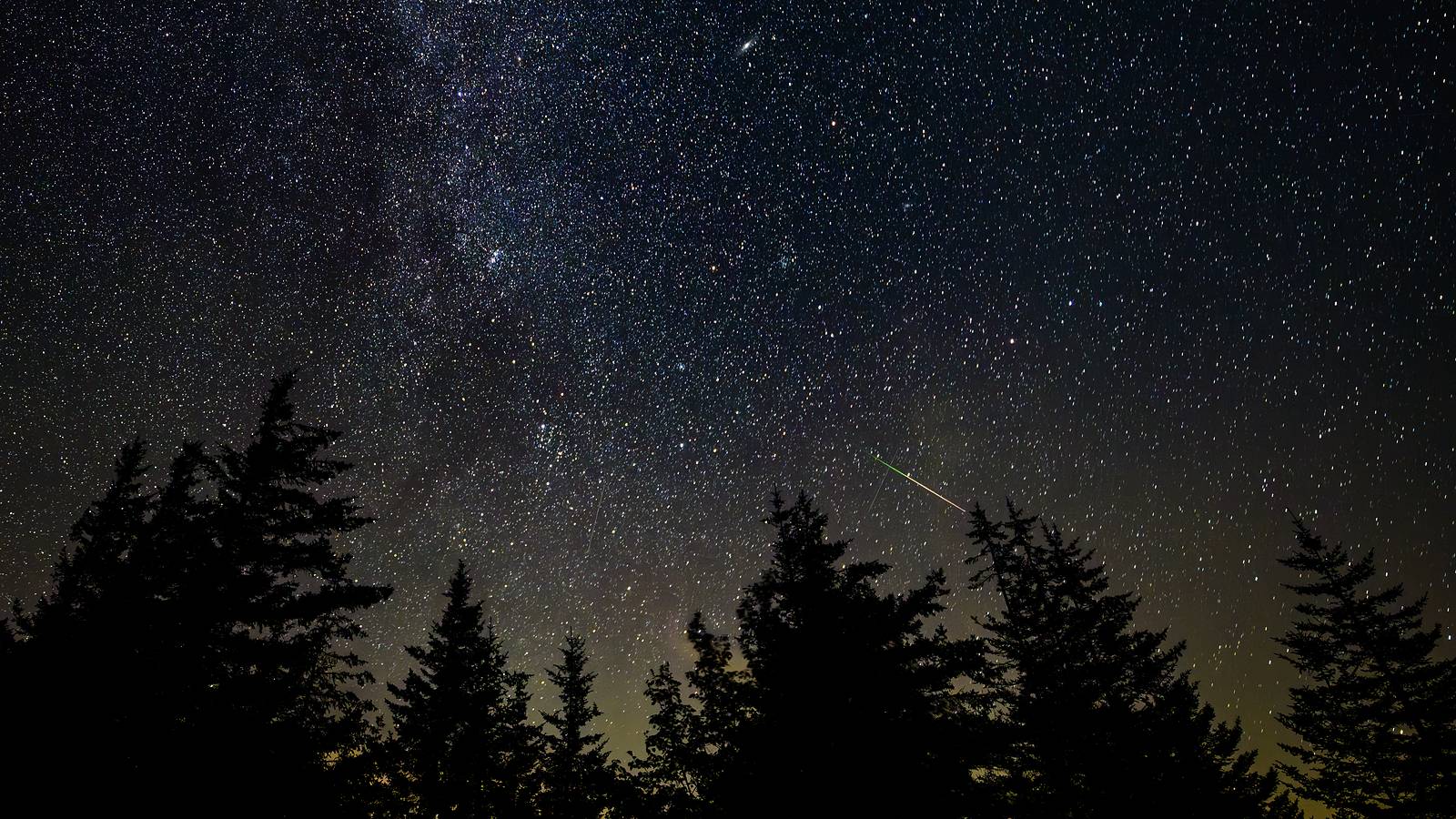
Major meteor showers return every year on the same dates: the Quadrantids in early January, the Lyrids in late April, the Perseids in mid-August, the Orionids in late October, the Leonids in mid-November, and the Geminids in mid-December—the most active of the year. To see them, look up on the night of the peak, after midnight, away from bright lights.
A shooting star is nothing like a star: it’s a speck of dust from space that burns up as it enters the atmosphere at speeds of several tens of kilometers per second. On certain nights, Earth passes through entire clouds of these particles: this is a meteor shower. Here is this year’s calendar and the best way to enjoy them.
Shooting star, meteor, meteorite: what are we talking about?
A speck of dust traveling through space is a meteoroid. The trail of light it produces as it burns up in the sky is a meteor, which everyone calls a shooting star. If it is large enough to survive its passage through the atmosphere and reach the ground, the piece that is recovered becomes a meteorite. We explain these distinctions in detail in our article on the difference between a meteorite, a meteor, and a meteoroid.
The Shooting Star Shower Calendar
Rain
Active period
Peak
Maximum rate (per hour)
Source
Quadrantids
December 28 – January 12
January 3–4
up to 110
Asteroid 2003 EH1
Lyrids
April 14–30
April 22–23
approximately 18
Thatcher Comet
Eta Aquarids
April 19 – May 28
May 5–6
about 50 (barely visible from France)
Halley’s Comet
Perseids
July 17 – August 24
August 12–13
about 100
Swift-Tuttle Comet
Draconides
October 6–10
October 8–9
variable, often about ten
Giacobini-Zinner Comet
Orionids
October 2 – November 7
October 21–22
about 20
Halley’s Comet
Leonides
November 6–30
November 17–18
approximately 15
Comet Tempel-Tuttle
Geminids
December 4–17
December 13–14
up to 150
Asteroid (3200) Phaeton
Ursides
December 17–26
December 22
about 10
Comet Tuttle
The rate given is a theoretical maximum, calculated for a perfectly dark sky with the meteor shower’s radiant at the zenith. From a garden or the countryside in France, you’ll actually see two to four times fewer meteors. The exact date of the peak can also vary by a day depending on the year: the International Meteor Organization (IMO) publishes a detailed calendar each year.
Three Events You Won’t Want to Miss
The Perseids, in August
These are the most famous because they occur in the middle of summer: mild nights, vacations, and the countryside sky. Traveling at high speeds (nearly 60 km/s), they often leave lingering trails. They are also called “the tears of Saint Lawrence,” whose feast day is August 10.
The Geminids, in December
The most prolific meteor shower of the year, and the most consistent. Its meteors are slower (35 km/s), making them easy to track, and they are often colorful. A unique feature: it originates not from a comet but from an asteroid, Phaethon. We’ve dedicated a full article to it: The Geminids—When and How to Observe Them.
The Quadrantids, in January
An intense but brief peak, lasting only a few hours, often accompanied by biting cold. For dedicated enthusiasts, this is one of the three most active meteor showers of the year.
How to Observe Shooting Stars
Get away from the light: just a few kilometers outside a city is enough to increase the number of visible shooting stars.
No telescope or binoculars: their field of view is far too narrow. Your eyes are the best instrument.
Let your eyes adjust: it takes 20 to 30 minutes in the dark. Avoid looking at your phone screen, or switch it to red light.
Lie down on a lounge chair or a blanket, and look at a wide swath of sky—not necessarily the constellation that gives the meteor shower its name.
Aim for the second half of the night: after midnight, the side of the Earth where you are “moves” into the dust stream, and the rate increases.
Keep an eye on the Moon: a full Moon near the peak will obscure the faintest meteors.
For photography, all you need is a camera on a tripod, a wide-angle lens, and a burst of 15- to 25-second exposures. Patience does the rest.
Where do shooting stars come from?
As comets approach the Sun, they shed dust along their orbits. These particles, often smaller than a grain of sand, form a stream that persists for centuries. Every year, on the same date, Earth passes through this stream: the particles enter the atmosphere at speeds ranging from 11 to 72 km/s and vaporize at altitudes of about 80 to 120 km. Since they all arrive from the same direction, their trails appear to radiate from a single point in the sky—the radiant—which gives the meteor shower its name.
Can a shooting star fall to Earth?
Not those from meteor showers: no meteorite has ever been found after one. Cometary particles are too small and too fragile; they disappear completely at high altitudes. The meteorites we collect come from much larger objects—asteroid fragments—that can arrive at any time and produce fireballs, sometimes spectacular ones, like the one in Chelyabinsk in 2013.
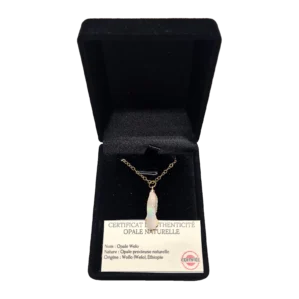
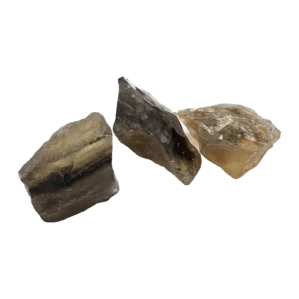
Do you dream of holding a piece of space after a night of stargazing? An authentic meteorite fragment in a display case is a lovely keepsake—and a great gift idea for a stargazer.
Frequently Asked Questions
What is the most spectacular meteor shower of the year?
The Geminids, in mid-December, are the most abundant (up to 150 meteors per hour in theory). The Perseids in August remain the most popular, thanks to the summer nights.
What time of night can you see the most shooting stars?
In the second half of the night, after midnight and until dawn. The Geminids are an exception: they’re already clearly visible as early as 10 p.m.
Do you need a telescope to see shooting stars?
No. The field of view of a telescope or binoculars is too narrow. All you need is a dark sky, a little patience, and eyes that are accustomed to the dark.
Why do meteor showers occur on the same dates every year?
Because every year, at the same point in its orbit, Earth crosses the stream of dust left behind by a comet or an asteroid.
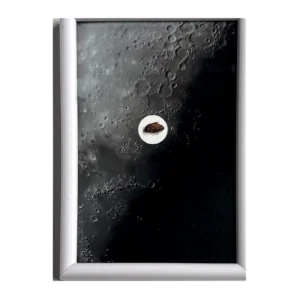
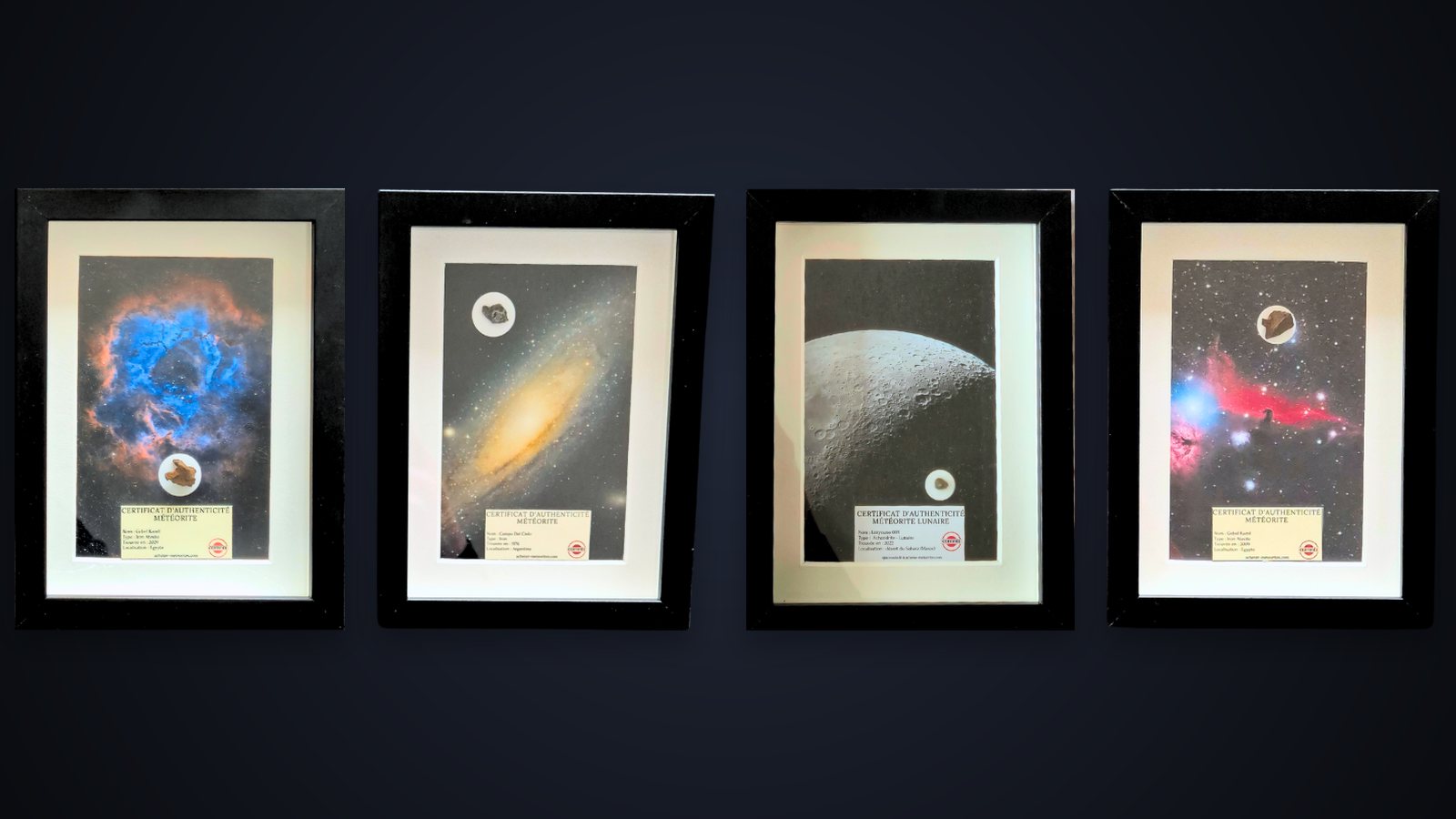
A meteorite frame pairs an image of the sky (galaxy, nebula, Moon or Sun) with a real meteorite fragment fixed into the composition, often with its certificate on show. Choose it by the subject of the image, the meteorite it holds and the colour of the frame; hang it away from direct sunlight and damp.
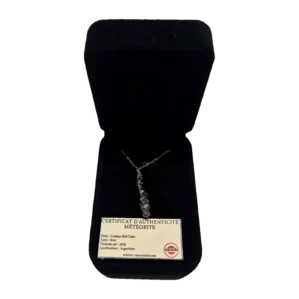
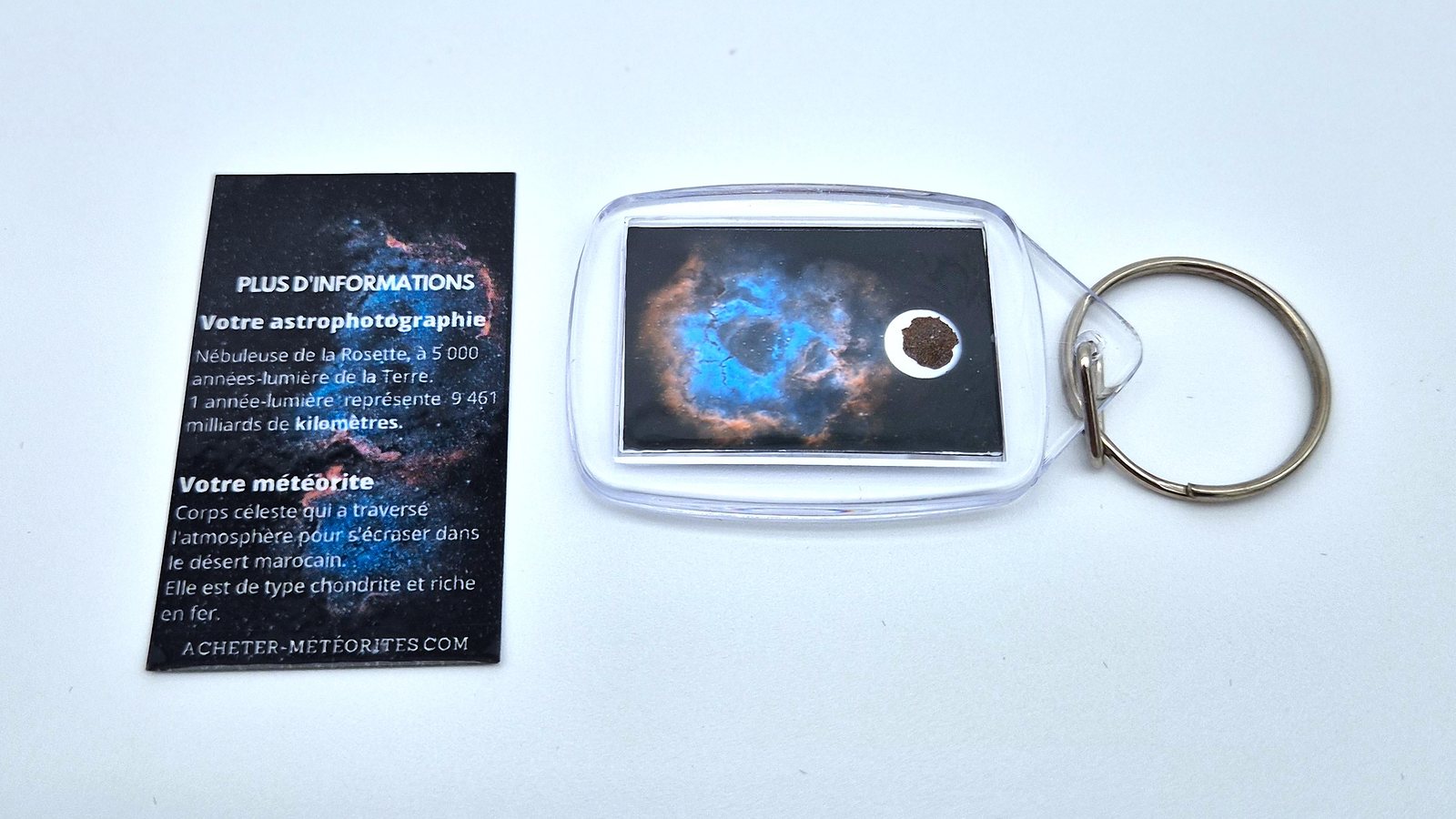
For a child who loves space, a real meteorite fragment is a gift that leaves a mark: in a gift box from age 6 or 7, with a magnifying glass and its certificate; as a keyring or in a frame with a photo of the sky for 9 to 12-year-olds; as a pendant for a teenager. Pair it with an activity to do together.
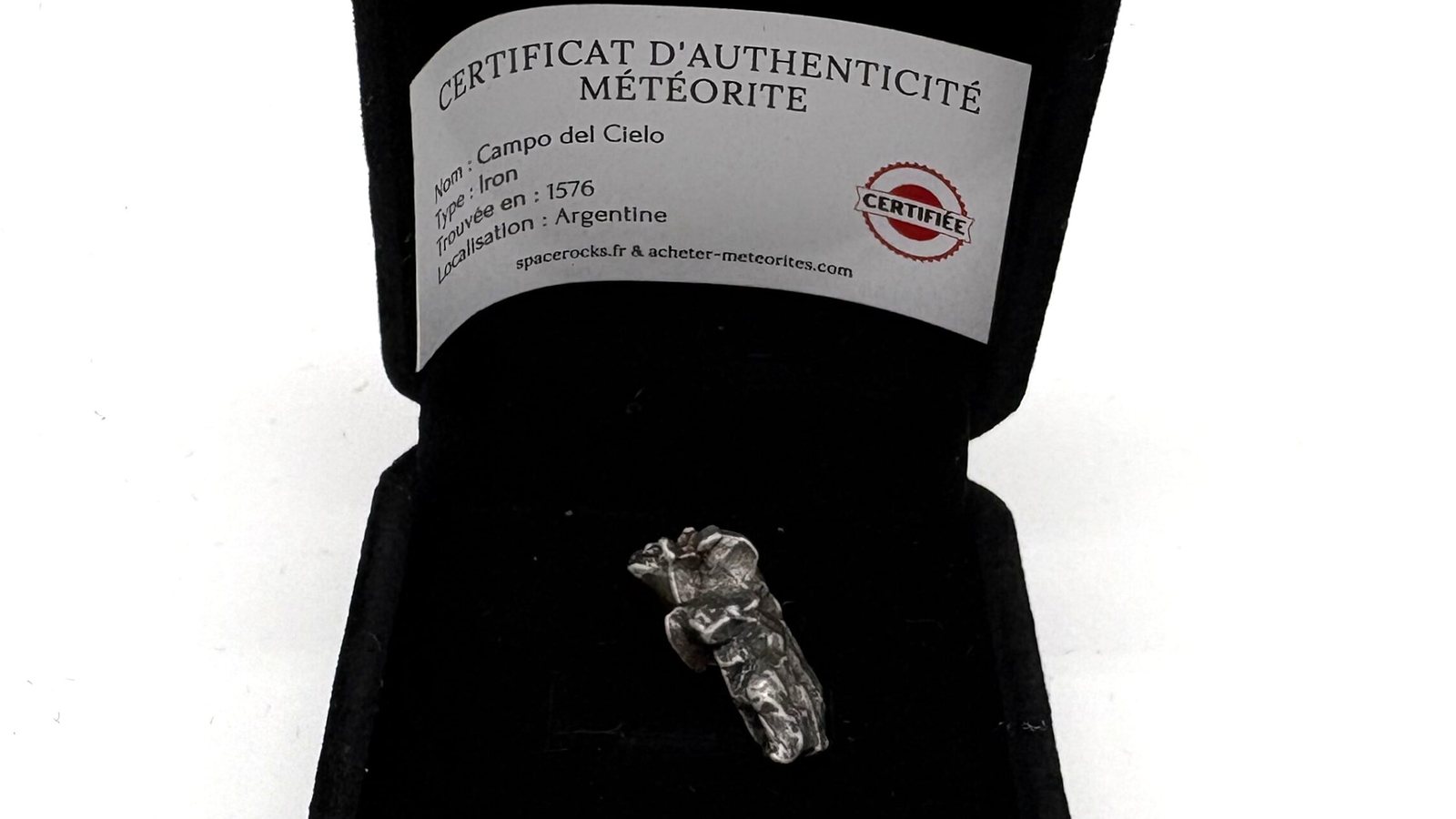
An iron meteorite, or siderite, is a fragment of the metallic core of an ancient asteroid, made of an iron-nickel alloy. It accounts for only about 5% of observed falls, but a large share of the meteorites found: it withstands time well and is easy to notice, because it is heavy and attracted by a magnet.
To provide the best possible experience, we use technologies such as cookies to store and/or access information on devices. Consent to these technologies will enable us to process data such as browsing behaviour or unique identifiers on this website. Failure to give consent, or withdrawal of consent, may adversely affect certain features and functions.
Functional
Always active
Storage or technical access is strictly necessary for the legitimate interest of enabling the use of a specific service explicitly requested by the subscriber or user, or for the sole purpose of transmitting a communication over an electronic communications network.
Preferences
Storage or technical access is necessary for the legitimate interest of storing preferences that are not requested by the subscriber or user.
Stats
Storage or technical access used exclusively for statistical purposes. Storage or technical access used exclusively for anonymous statistical purposes. In the absence of a court order, voluntary cooperation from your internet service provider or additional records from a third party, information stored or retrieved for this purpose alone cannot generally be used to identify you.
Marketing
Storage or technical access is required to create user profiles for the purpose of sending adverts, or to track the user across a website or across several websites with similar marketing purposes.