
The Elephant Trunk Nebula: A Masterpiece Sculpted by the Stars
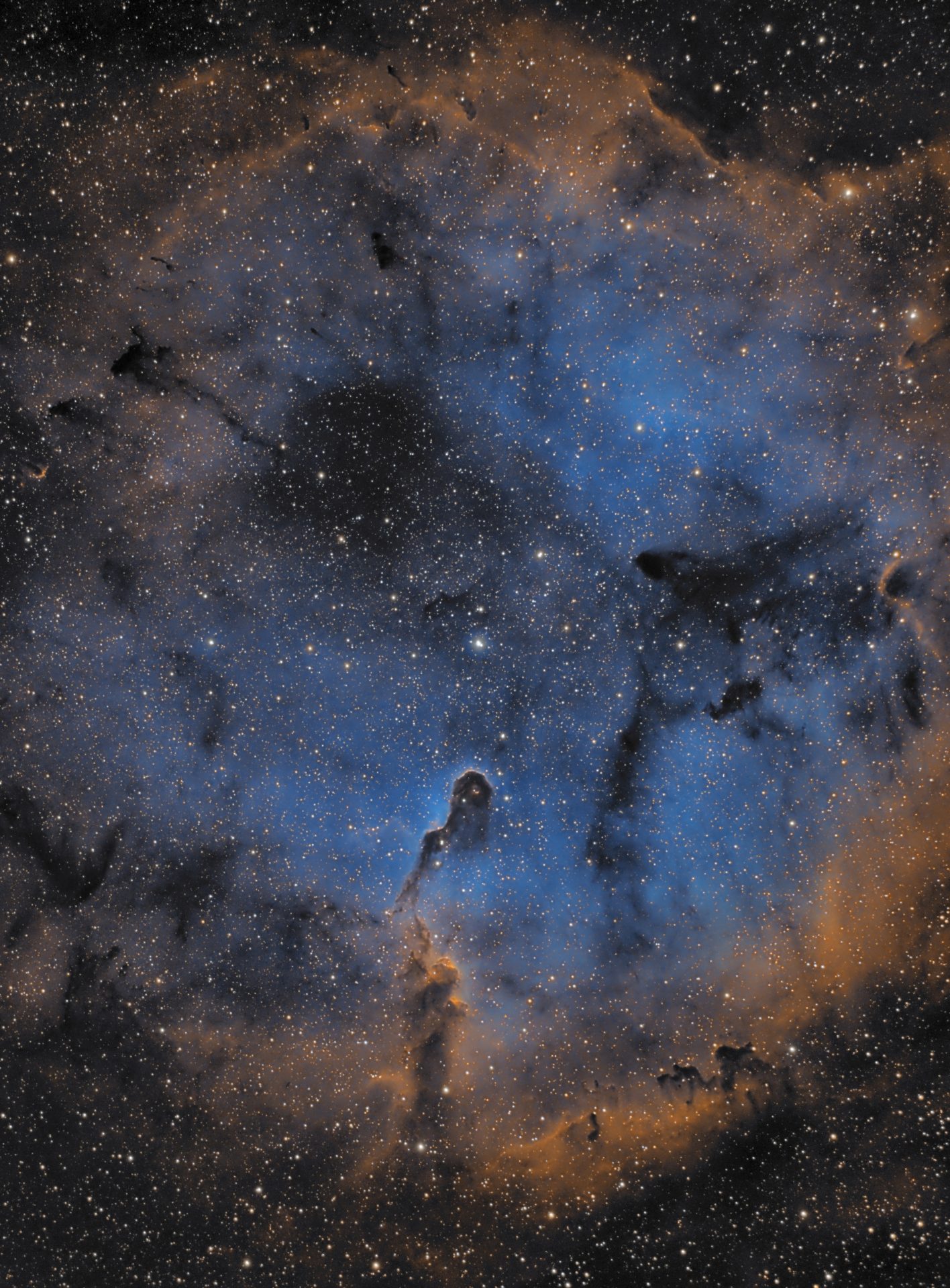
Imagine a celestial landscape in which a giant elephant trunk seems to loom in space. Welcome to the Elephant Trunk Nebula, also known as IC 1396A. This curious formation, both imposing and mysterious, has captured the imagination of astronomers. Join us as we explore the scientific anecdotes and hidden wonders behind this astonishing nebula.
An Elephant in the Cosmos
The Elephant Trunk Nebula lies in the constellation Cepheus, some 2,400 light-years from our planet. Its distinctive shape, reminiscent of an elephant’s trunk, gives it its name. This formation lies within the much larger IC 1396 nebula, and represents one of the finest examples of an absorption nebula.
Natural Sculpture in Space
What gives the Elephant Trunk Nebula its unique shape? The “trunk” is actually a column of gas and dust that has been sculpted by the stellar wind and radiation from surrounding stars. This process is similar to that which formed the famous “Pillars of Creation” in the Eagle Nebula.
A Cradle of Stars
Like many other nebulae, the Elephant Trunk Nebula is a nursery of stars. Inside the “trunk”, young, hot stars are being born. The pressure exerted by the light from nearby stars compresses the gas and dust, creating ideal conditions for the formation of new stars.
The Elephant in the Room… of Stars
You may be wondering why you’ve never seen this elephant in the night sky. That’s because the Elephant Trunk Nebula, like many other nebulae, is very difficult to see without the aid of a telescope. In fact, it’s almost invisible to the naked eye. However, with the help of a telescope and long photographic exposures, this celestial elephant trunk can be revealed in all its glory.
The Elephant Trunk Nebula is a living illustration of the beauty and complexity of the universe. It bears witness to the birth and evolution of stars, and how these processes shape the space around us. Join us as we continue to explore these celestial wonders and discover the secrets of our fascinating cosmos.


