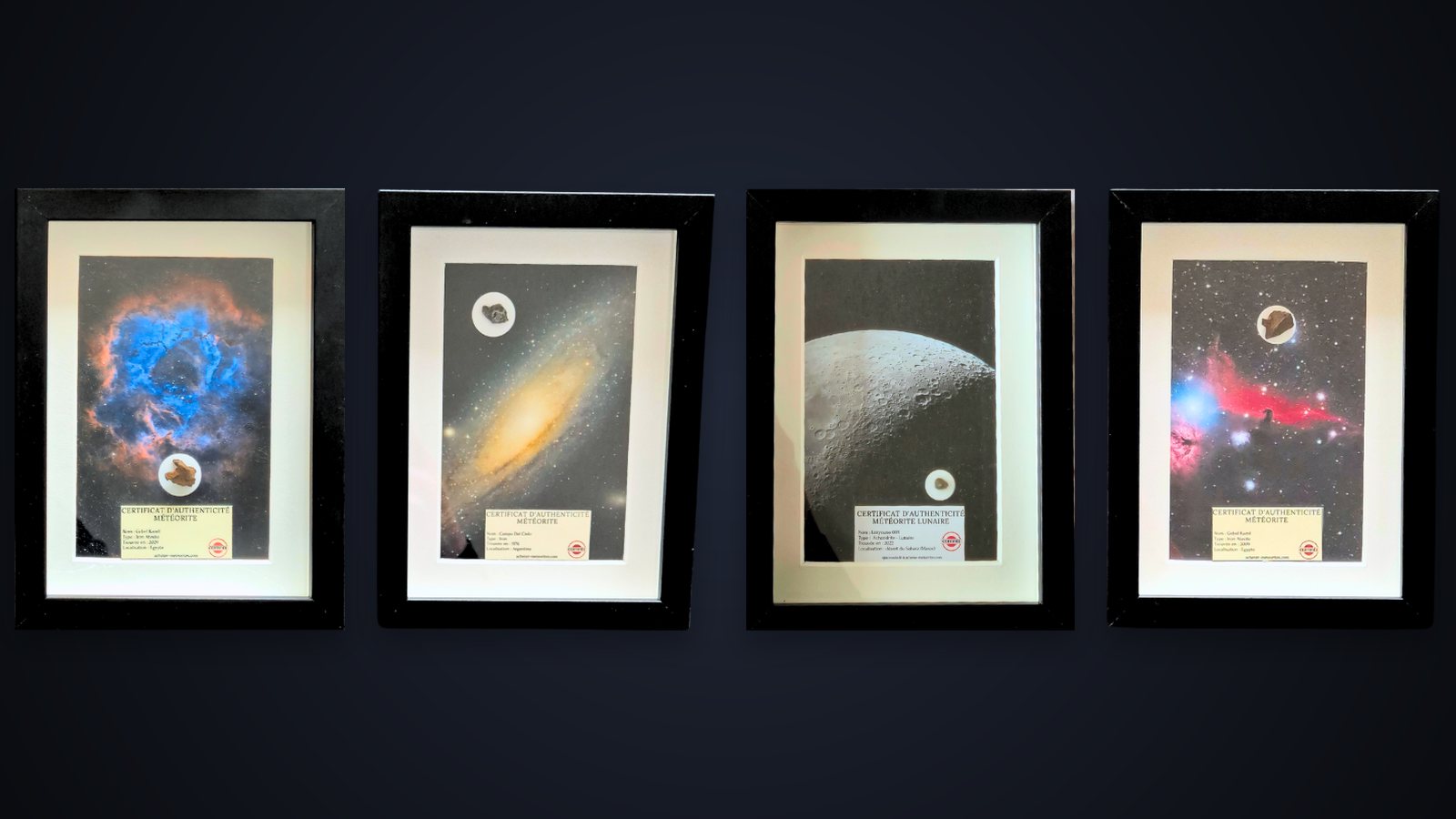
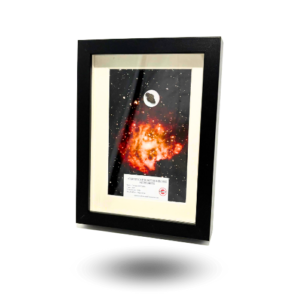
A meteorite frame pairs an image of the sky (galaxy, nebula, Moon or Sun) with a real meteorite fragment fixed into the composition, often with its certificate on show. Choose it by the subject of the image, the meteorite it holds and the colour of the frame; hang it away from direct sunlight and damp.
Some decorative objects are there to be looked at; others come with a story. A frame that brings together a photograph of a galaxy and a piece of an asteroid belongs to the second kind: all it takes is one curious guest for the conversation to head off towards the stars. Here is how these frames are designed, and how to choose yours.
Two stories in one frame
The image shows the light of distant objects: the Andromeda galaxy, for example, lies about 2.5 million light-years away. The light that reached the camera sensor therefore left the galaxy long before our species appeared. The fragment, on the other hand, is very real matter: a piece of an asteroid 4.5 billion years old, fallen to Earth, that you can almost touch. The frame puts what we see of the cosmos face to face with what we can own of it.
How are the images made?
Most of our frames use photographs by our collective of astrophotographers. A deep-sky astrophotograph takes hours of exposure spread over one or more nights: dozens of images are stacked to bring out details invisible to the naked eye, then carefully processed. Some views are taken through filters that isolate the light of hydrogen, sulphur or oxygen, which gives the colours of the famous “Hubble palette”.
The subjects on offer include the Andromeda galaxy and the Triangulum galaxy, our large neighbours; the Rosette, Heart, Tulip and Monkey Head nebulae, clouds of gas where stars are born; the Moon and its craters; the Sun. A few models are graphic creations based on images of the sky: each product page says so.
Which meteorite is in the frame?
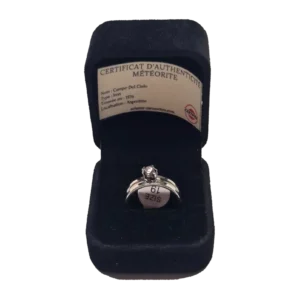
Campo del Cielo, the iron meteorite that fell in Argentina about 4,000 years ago, the most common in our frames;
Gebel Kamil, the iron shrapnel from the Kamil crater in Egypt;
NWA 14093, a mesosiderite from Morocco, half stone, half metal;
a chondrite from the Sahara, the dark stone typical of the most common meteorites;
Laâyoune 003, a lunar meteorite, paired with a photograph of the Moon.
On several models, the certificate of authenticity is slipped into the frame and visible from the front: the origin of the piece can be read at a glance.
Choosing your frame
By subject
Galaxies evoke immensity, nebulae colour and the birth of stars, the Moon closeness and the memory of the Apollo missions. For a more understated piece, the black-and-white versions bring out the textures of the gas like a charcoal drawing.
By room
A black frame shows off dark images and suits contemporary interiors; a white frame lightens the whole in a bright room. The 15 × 20 cm format, the most common in our collection, sits on a desk or shelf and works well in groups of two or three frames. The Moon photograph with its lunar fragment comes in a larger format.
Where and how to hang it
At eye level: the centre of the frame about 1.50 m from the floor, or standing on a desk, a bookcase or a mantelpiece.
Away from direct sunlight, which eventually fades any photograph.
Away from damp: avoid the bathroom and the kitchen. An iron meteorite fragment can oxidise in a damp room.
In a series: three small frames in a row, for example a galaxy, a nebula and the Moon, make a very effective astronomy wall.
An affordable gift idea
With prices starting at around €20 to €45 for the 15 × 20 cm formats, the meteorite frame is one of the most affordable “real piece of space” gifts. It appeals to astronomy enthusiasts and complete beginners alike, and needs no maintenance. More ideas in our guide what to give an astronomy enthusiast.
Frequently asked questions
Are the images in the frames real photographs of the sky?
Most are astrophotographs taken by our collective after long nights of observation. A few models are graphic creations based on images of the sky, as the product page indicates.
Is the meteorite fragment authentic?
Yes. Every frame contains an authentic meteorite fragment and comes with a certificate stating its name; on several models, the certificate is visible on the front of the frame.
What size are the frames?
Most measure 15 × 20 cm, a format that is easy to stand or hang. The frame pairing a photograph of the Moon with a lunar fragment is larger.
Can you hang a meteorite frame in a bathroom?
Best avoided: damp damages photographs and can make an iron meteorite fragment rust.
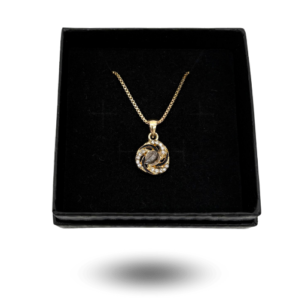
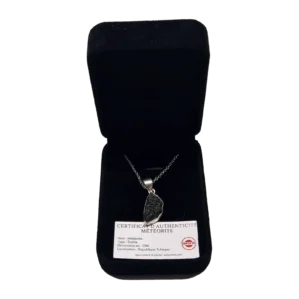
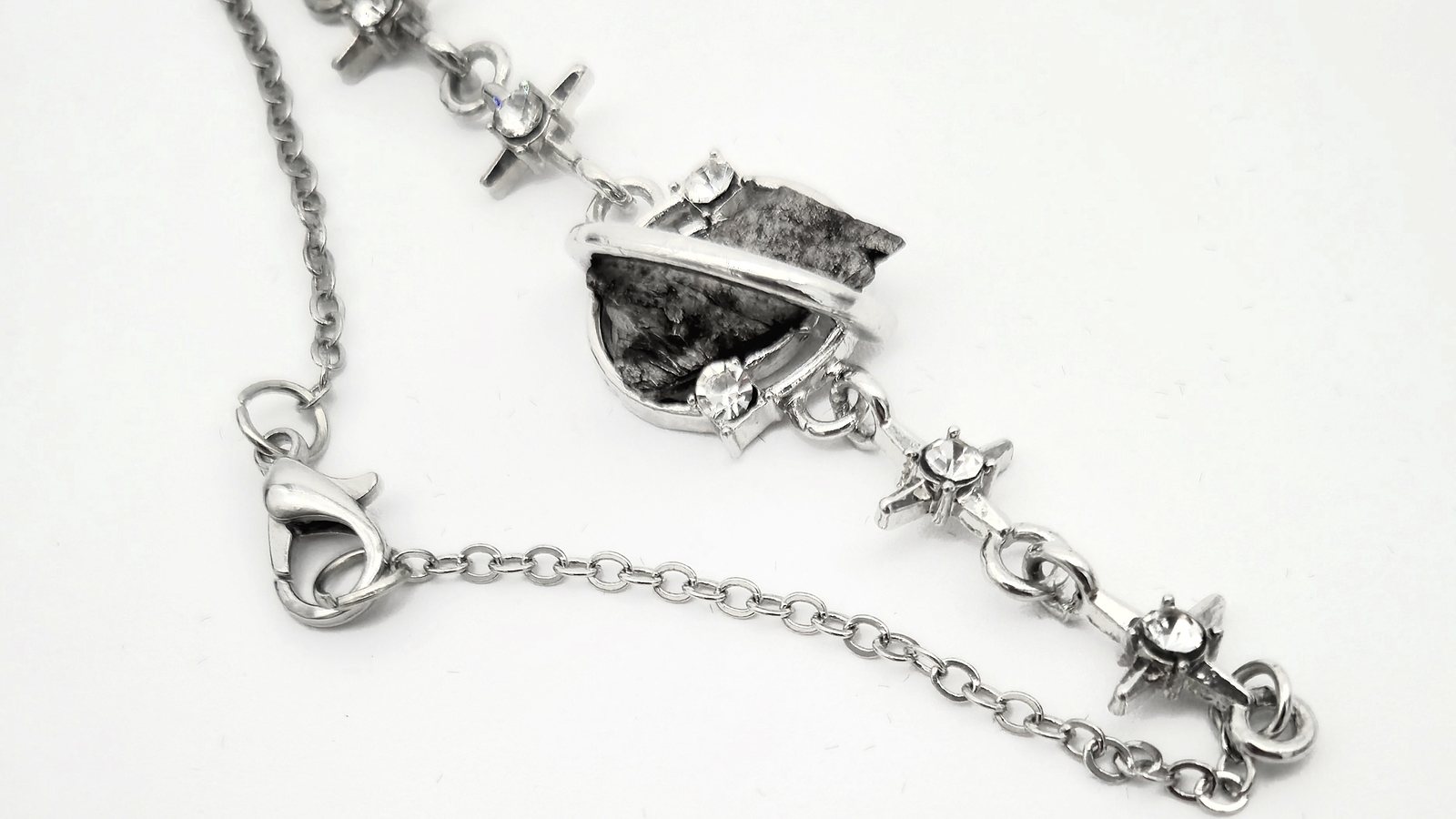
To care for meteorite jewellery, keep it dry: take it off for the shower, swimming and sport, wipe it after contact with water or sweat, and store it with a desiccant sachet. If spots of rust appear on a bare iron fragment, gentle brushing with isopropyl alcohol is usually enough.
A meteorite frame pairs an image of the sky (galaxy, nebula, Moon or Sun) with a real meteorite fragment fixed into the composition, often with its certificate on show. Choose it by the subject of the image, the meteorite it holds and the colour of the frame; hang it away from direct sunlight and damp.
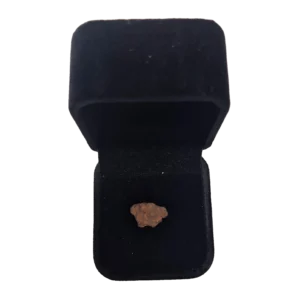
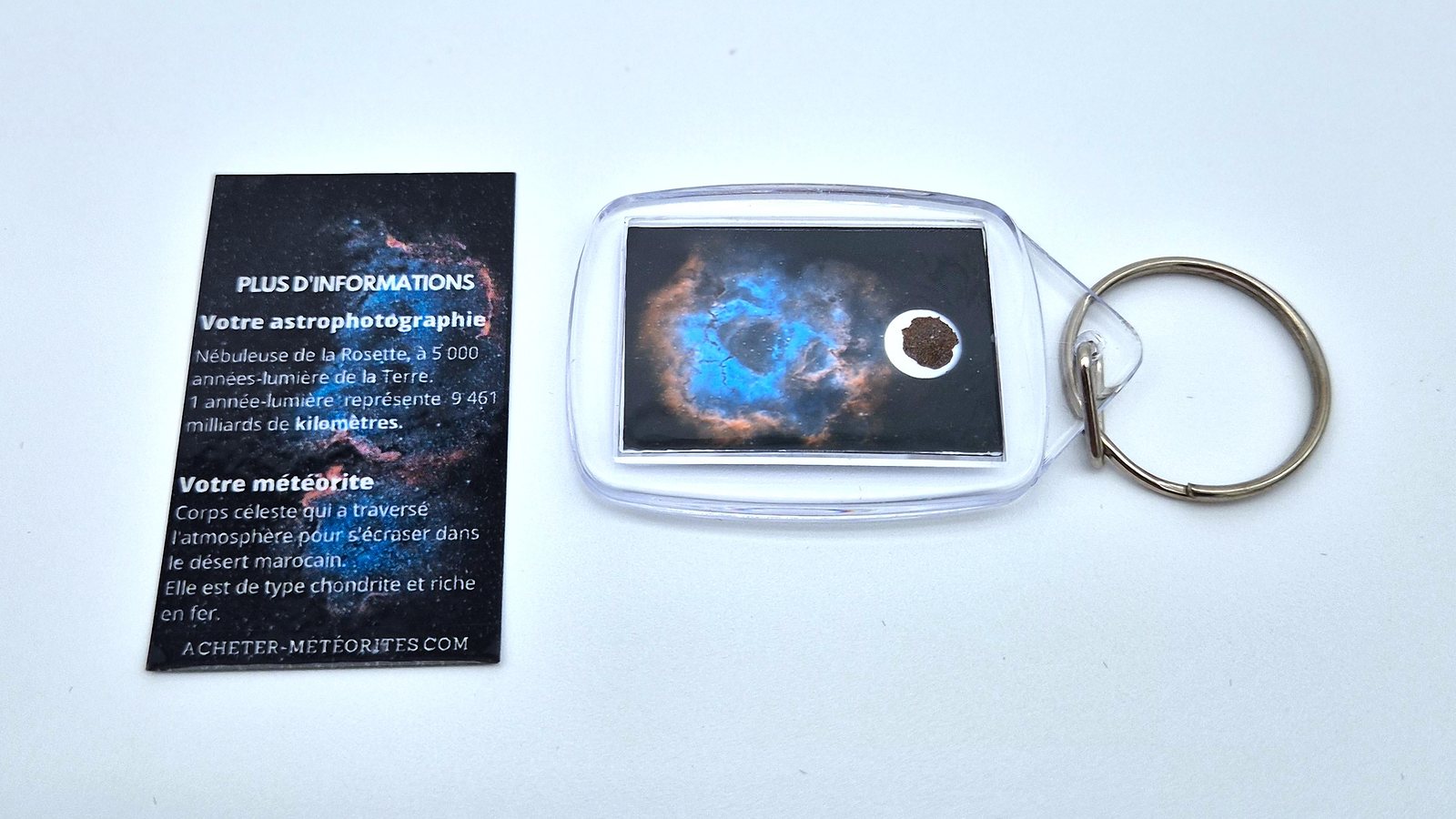
For a child who loves space, a real meteorite fragment is a gift that leaves a mark: in a gift box from age 6 or 7, with a magnifying glass and its certificate; as a keyring or in a frame with a photo of the sky for 9 to 12-year-olds; as a pendant for a teenager. Pair it with an activity to do together.
To provide the best possible experience, we use technologies such as cookies to store and/or access information on devices. Consent to these technologies will enable us to process data such as browsing behaviour or unique identifiers on this website. Failure to give consent, or withdrawal of consent, may adversely affect certain features and functions.
Functional
Always active
Storage or technical access is strictly necessary for the legitimate interest of enabling the use of a specific service explicitly requested by the subscriber or user, or for the sole purpose of transmitting a communication over an electronic communications network.
Preferences
Storage or technical access is necessary for the legitimate interest of storing preferences that are not requested by the subscriber or user.
Stats
Storage or technical access used exclusively for statistical purposes. Storage or technical access used exclusively for anonymous statistical purposes. In the absence of a court order, voluntary cooperation from your internet service provider or additional records from a third party, information stored or retrieved for this purpose alone cannot generally be used to identify you.
Marketing
Storage or technical access is required to create user profiles for the purpose of sending adverts, or to track the user across a website or across several websites with similar marketing purposes.