If you think you have found a meteorite, start with a few simple tests (magnet, weight, crust, no bubbles), without cleaning or breaking it. Photograph it, note the exact location, then contact the Vigie-Ciel programme or the French National Museum of Natural History. In France, it belongs in principle to the landowner.
A dark stone, surprisingly heavy, in the middle of a field or at the bottom of the garden: what if it were a meteorite? It rarely is, but it does happen, and a genuine find in France has real scientific value. Here are the steps to follow, one by one, and what the law says.
First, keep a cool head
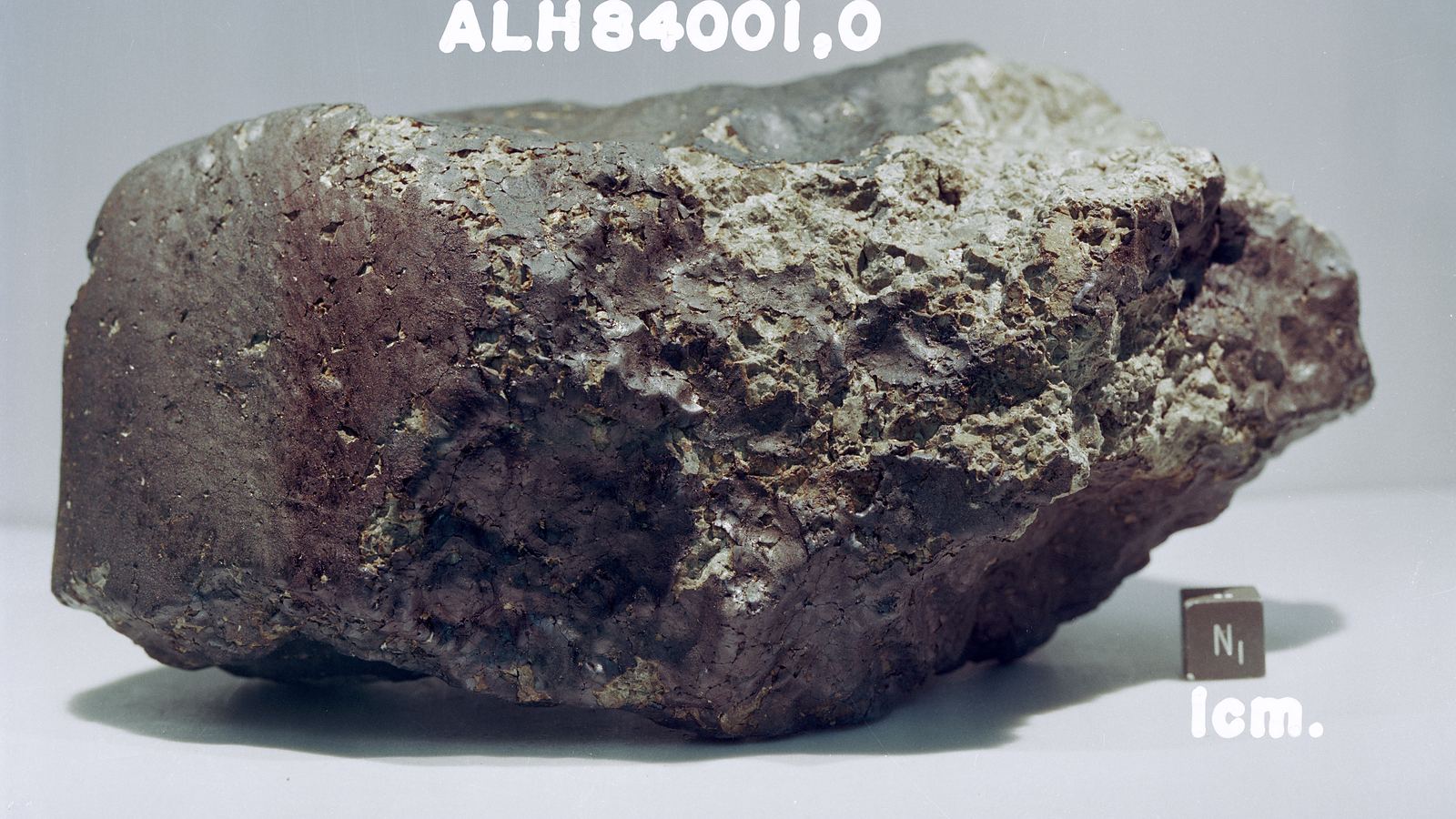
The vast majority of stones mistaken for meteorites are not. The most common: industrial slag (foundry waste, often bubbly), hematite and magnetite (iron ores), basalts, nodules and concretions. Specialists jokingly call them “meteorwrongs”. A few checks are enough to rule out most of them.
The first tests to do at home
The magnet: most meteorites contain iron and nickel, and clearly attract a magnet.
The weight: they are heavier than an ordinary stone of the same size, especially iron meteorites.
The crust: a recent meteorite is covered with a thin, black, matt fusion crust, sometimes cracked; older ones are brown and rusty.
Bubbles: a meteorite almost never has holes or bubbles. A pitted, honeycombed stone is most often slag or volcanic rock.
The streak: rubbed on the unglazed back of a ceramic tile, hematite leaves a red-brown streak and magnetite a black one. A meteorite usually leaves almost nothing.
Brush it, wash it or rub it with a product: you would destroy valuable clues.
Break or cut it to see inside: leave that to the laboratory.
Sell or divide it before you know what it is and have settled the question of ownership.
If you saw the stone fall
A recent fall is a treasure for science: the meteorite has not yet been altered by water and air. In that case:
photograph it where it lies before touching it, with something for scale, and note the GPS position;
pick it up with aluminium foil or a clean bag, without touching it with bare hands;
keep magnets away: they could erase the stone’s natural magnetisation, which researchers study;
report it without delay on the Vigie-Ciel website.
Vigie-Ciel, run by the French National Museum of Natural History and the Paris Observatory with the FRIPON camera network, also collects fireball sightings. It is thanks to this network that fragments of asteroid 2023 CX1 were recovered in Normandy in 2023; we tell that story in our article on meteorites that fell in France.
Getting your find analysed
Only a laboratory analysis can confirm that a stone is a meteorite and classify it. In France, you can contact the National Museum of Natural History, which holds one of the largest meteorite collections in the world, or a university geoscience laboratory such as CEREGE in Aix-en-Provence. Elsewhere, a natural history museum or a university geology department is the right first contact. Send sharp photos first, with a scale, and a description: weight, dimensions, location and circumstances of the find.
If the stone is indeed a meteorite, it is customary to give a fragment, usually 20 grams or 20% of the mass if it is smaller, to a scientific collection. That is the condition for the meteorite to receive an official name from the Meteoritical Society.
Who owns a meteorite found in France?
No French law deals specifically with meteorites. The most widespread interpretation relies on article 552 of the Civil Code, under which ownership of the land includes ownership of what is above and below it: a meteorite would therefore belong to the owner of the land where it fell. Members of parliament have questioned the government about this legal grey area several times, and the State is working with the Museum to clarify the framework, but no dedicated text has been adopted to date.
In practice:
on your own land, the meteorite is yours;
on someone else’s land, ask the owner’s permission before any search, and agree in writing on what happens to a possible find;
the use of metal detectors is regulated in France by the Heritage Code: find out before prospecting;
for a specific situation (public land, dispute), consult a legal professional.
And abroad?
The rules vary widely from country to country. Several countries prohibit or strictly regulate the export of their meteorites, and collecting in Antarctica is reserved for scientific research. Never bring a stone back from a trip without checking the local law.
And if you would rather buy one?
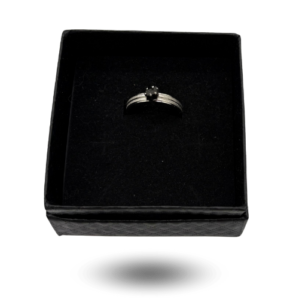
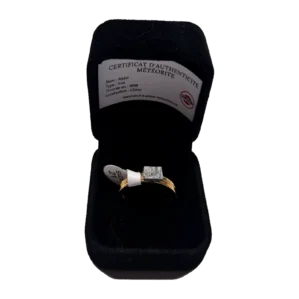
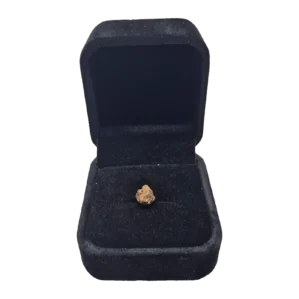
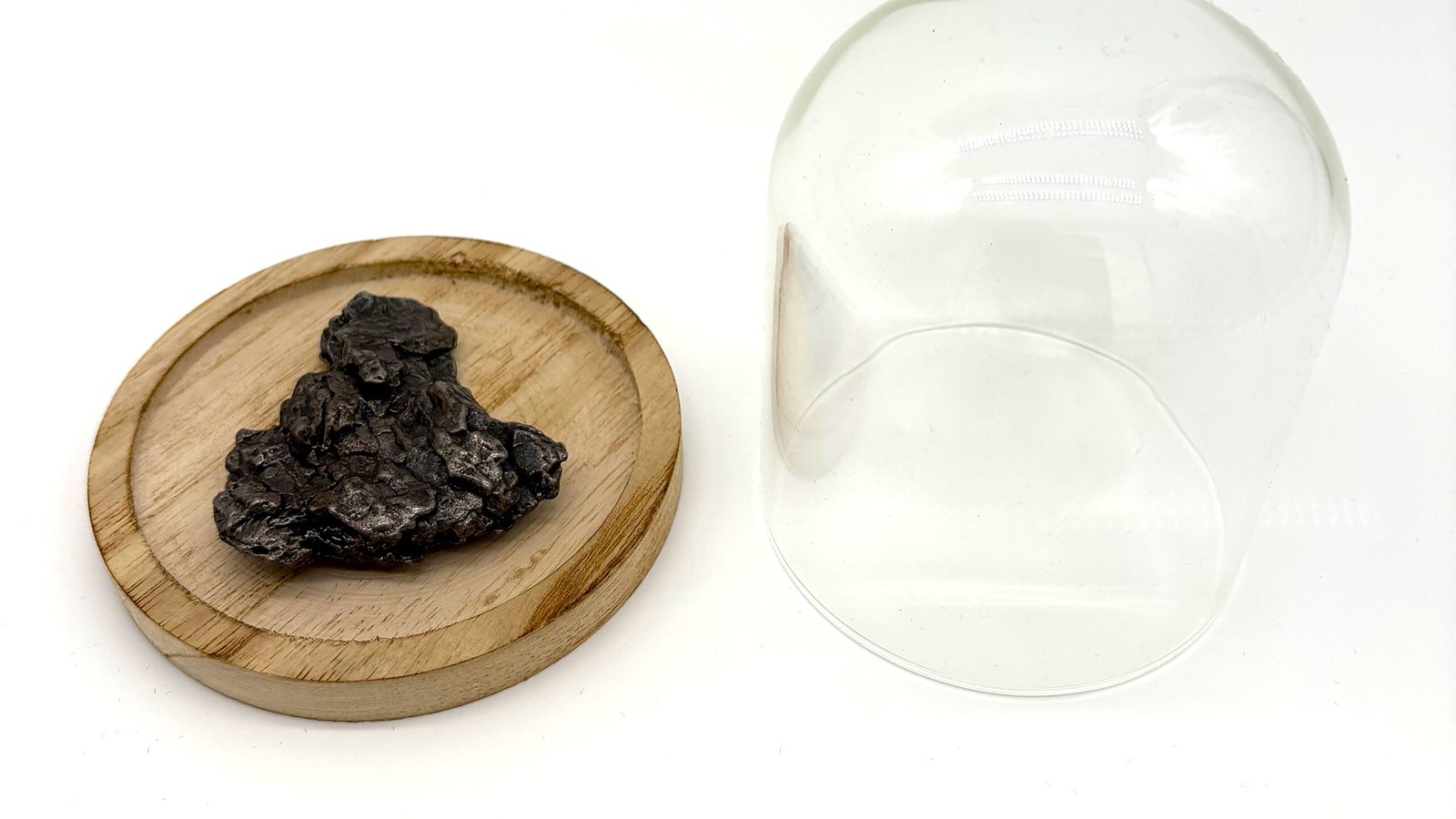
Finding a meteorite takes a lot of patience and a bit of luck. To own one today, choose a named specimen that comes with a certificate of authenticity. And to go hunting yourself, read our guide on how to find meteorites.
Frequently asked questions
How do I know if I have found a meteorite?
A few clues: it attracts a magnet, it is heavy for its size, it has a dark crust and no bubbles. Only a laboratory analysis can confirm it.
Who should I contact if I find a meteorite?
In France, the Vigie-Ciel programme for a recent fall, and the National Museum of Natural History or a university geoscience laboratory to have a find analysed. Elsewhere, a natural history museum or a university geology department.
Can I keep a meteorite found in my garden?
In France, according to the most common interpretation of the Civil Code, yes: it belongs to the landowner. No law specific to meteorites exists to date. Giving a fragment to science is still strongly recommended.
How much is a meteorite found in France worth?
It depends on its type, mass and condition. French meteorites are rare: a genuine find interests science as much as collectors. Our article how much is a meteorite worth details the value criteria.
If you think you have found a meteorite, start with a few simple tests (magnet, weight, crust, no bubbles), without cleaning or breaking it. Photograph it, note the exact location, then contact the Vigie-Ciel programme or the French National Museum of Natural History. In France, it belongs in principle to the landowner.
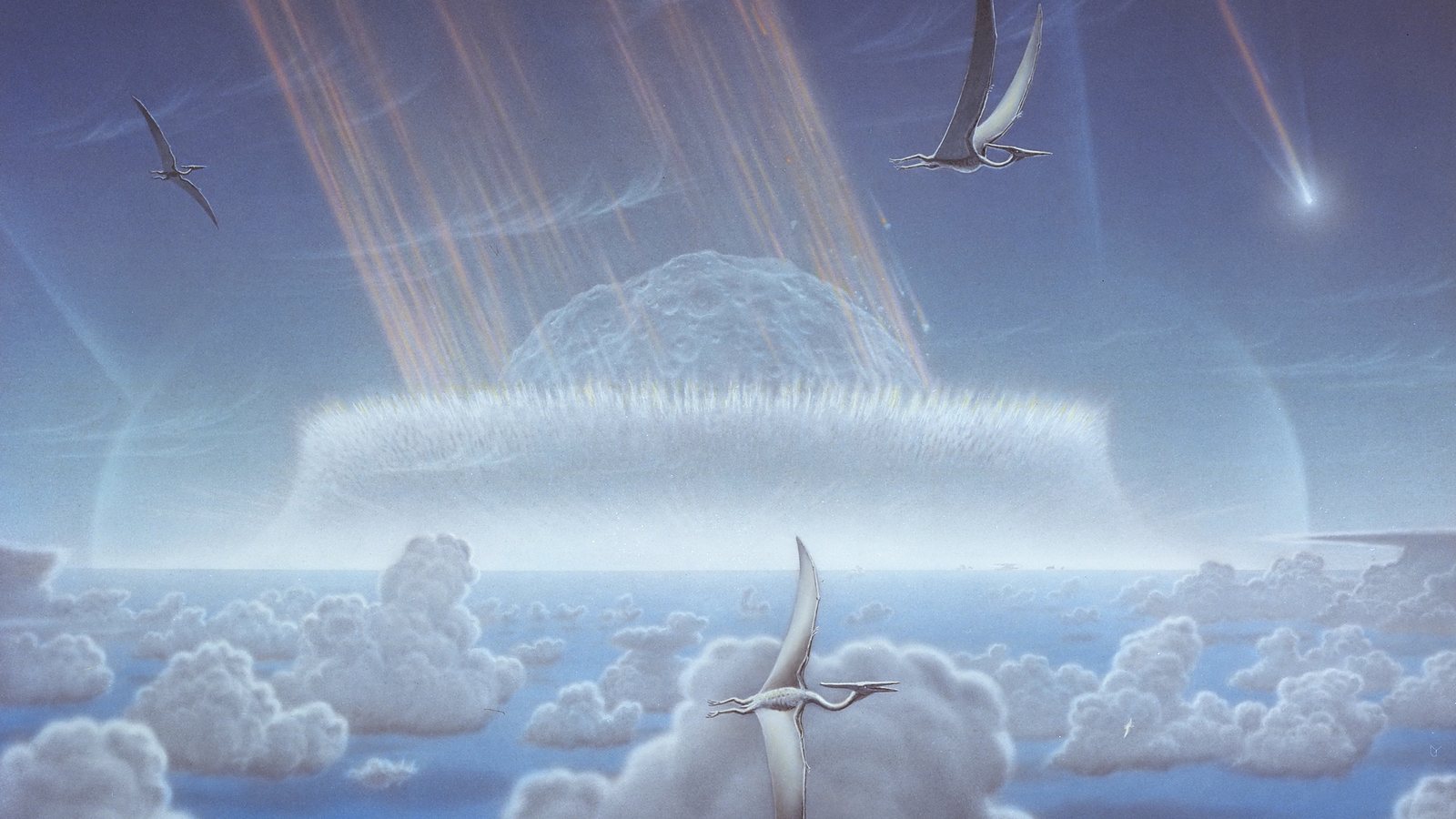
66 million years ago, an asteroid about ten kilometres across struck the Yucatán Peninsula in Mexico, digging the Chicxulub crater, some 180 km wide. The impact triggered a global climate upheaval that wiped out the non-avian dinosaurs and about three quarters of living species.
The largest meteorite in the world is Hoba, in Namibia: a block of iron weighing more than 60 tonnes, discovered in 1920 and never moved since. Next come Ahnighito (Cape York, Greenland, nearly 31 tonnes), two blocks of Campo del Cielo in Argentina (30.8 and 28.8 tonnes) and Armanty, a fragment of the Chinese Aletai meteorite (28 tonnes).
To provide the best possible experience, we use technologies such as cookies to store and/or access information on devices. Consent to these technologies will enable us to process data such as browsing behaviour or unique identifiers on this website. Failure to give consent, or withdrawal of consent, may adversely affect certain features and functions.
Functional
Always active
Storage or technical access is strictly necessary for the legitimate interest of enabling the use of a specific service explicitly requested by the subscriber or user, or for the sole purpose of transmitting a communication over an electronic communications network.
Preferences
Storage or technical access is necessary for the legitimate interest of storing preferences that are not requested by the subscriber or user.
Stats
Storage or technical access used exclusively for statistical purposes. Storage or technical access used exclusively for anonymous statistical purposes. In the absence of a court order, voluntary cooperation from your internet service provider or additional records from a third party, information stored or retrieved for this purpose alone cannot generally be used to identify you.
Marketing
Storage or technical access is required to create user profiles for the purpose of sending adverts, or to track the user across a website or across several websites with similar marketing purposes.