About 200 meteorite craters are known on Earth. The most impressive are Meteor Crater in Arizona, perfectly preserved; Vredefort in South Africa, the largest known; Chicxulub in Mexico, linked to the end of the dinosaurs; and Manicouagan in Quebec. France has one too: the Rochechouart impact structure, in the Limousin.
The Moon is riddled with craters; the Earth, which has received far more impacts, shows only a few. Those that have survived tell of events of unimaginable violence, and some can be visited. Here are the most spectacular, and what you need to know to recognise them.
Why do we see so few craters on Earth?
Because our planet erases its scars. Erosion, rain, vegetation and sedimentation fill them in or flatten them; plate tectonics recycles the ocean floor, where most meteorites fall. On the Moon, with no air or water, a crater can stay intact for billions of years. On Earth, geologists have confirmed about 200 impact structures, and the list keeps growing.
How do you recognise an impact crater?
A circle in the landscape is not enough: many volcanic craters look similar. The proof is mineral. Only an impact produces pressures high enough to create “shocked” quartz, streaked with fine lamellae, ultra-dense forms of silica such as coesite or stishovite, and shatter cones, rocks fractured into striated cones. Around small recent craters, fragments of the meteorite itself are also found.
The shape depends on size. Small craters are simple bowls; beyond a few kilometres, the floor rebounds to form a central peak, then concentric rings. A crater is generally 10 to 20 times the diameter of the object that dug it.
The most spectacular craters
Meteor Crater (Arizona, United States)
The most famous and best preserved: 1.2 km across and about 170 m deep, dug about 50,000 years ago by an iron meteorite a few tens of metres across, of which tonnes of fragments have been found under the name Canyon Diablo. It was the first crater recognised as meteoritic in origin, in the early 20th century. It can be visited, with a visitor centre on the rim.
Vredefort (South Africa)
The largest known crater: it originally measured 250 to 300 km across, and it is also one of the oldest, at about 2 billion years. Erosion has left only its root today, an arc of hills, listed as a UNESCO World Heritage Site.
Chicxulub (Mexico)
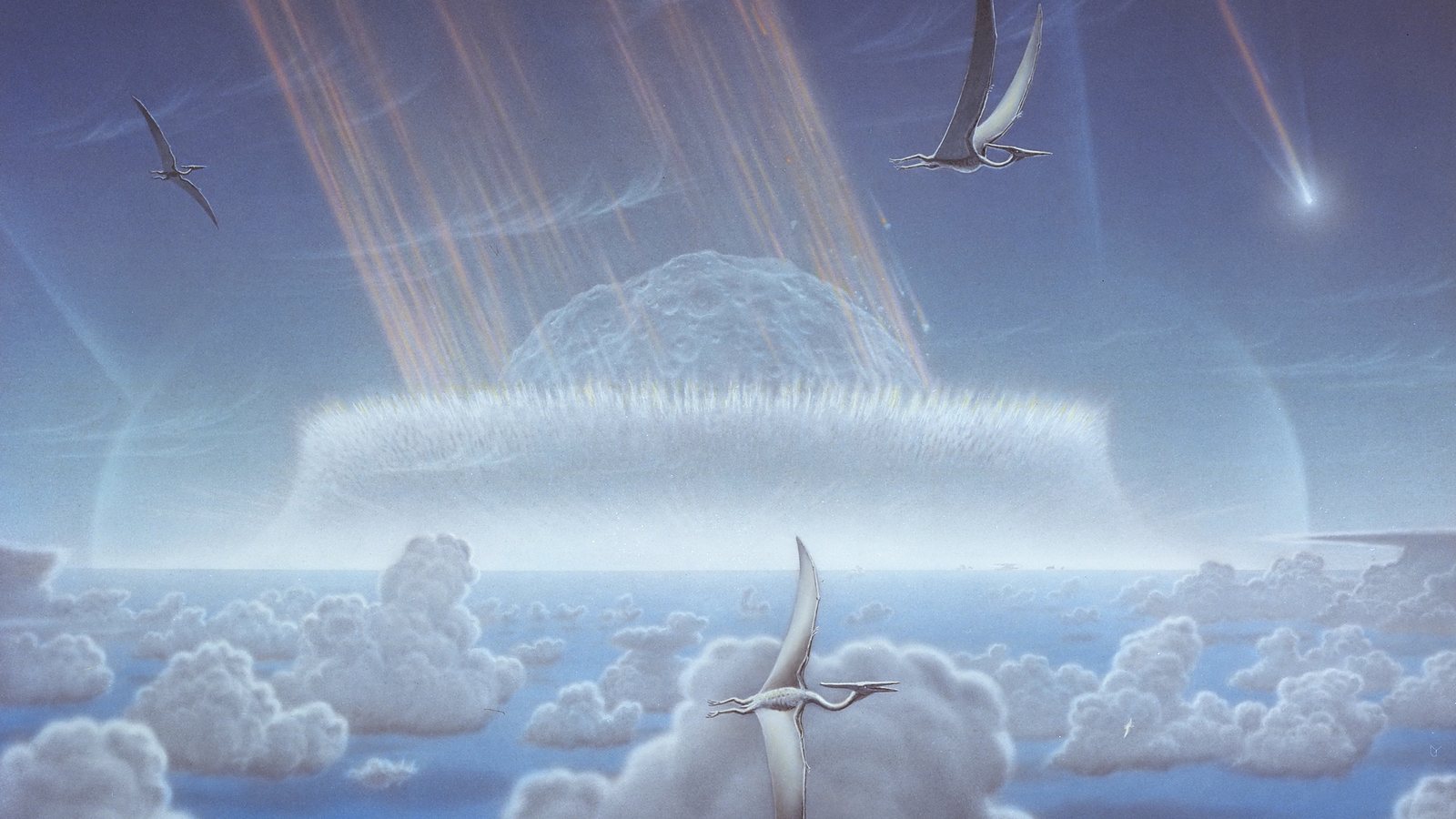
About 180 km across, buried beneath the sediments of the Yucatán: it is the trace of the impact that ended the reign of the dinosaurs 66 million years ago. The full story is in our article on the dinosaur meteorite.
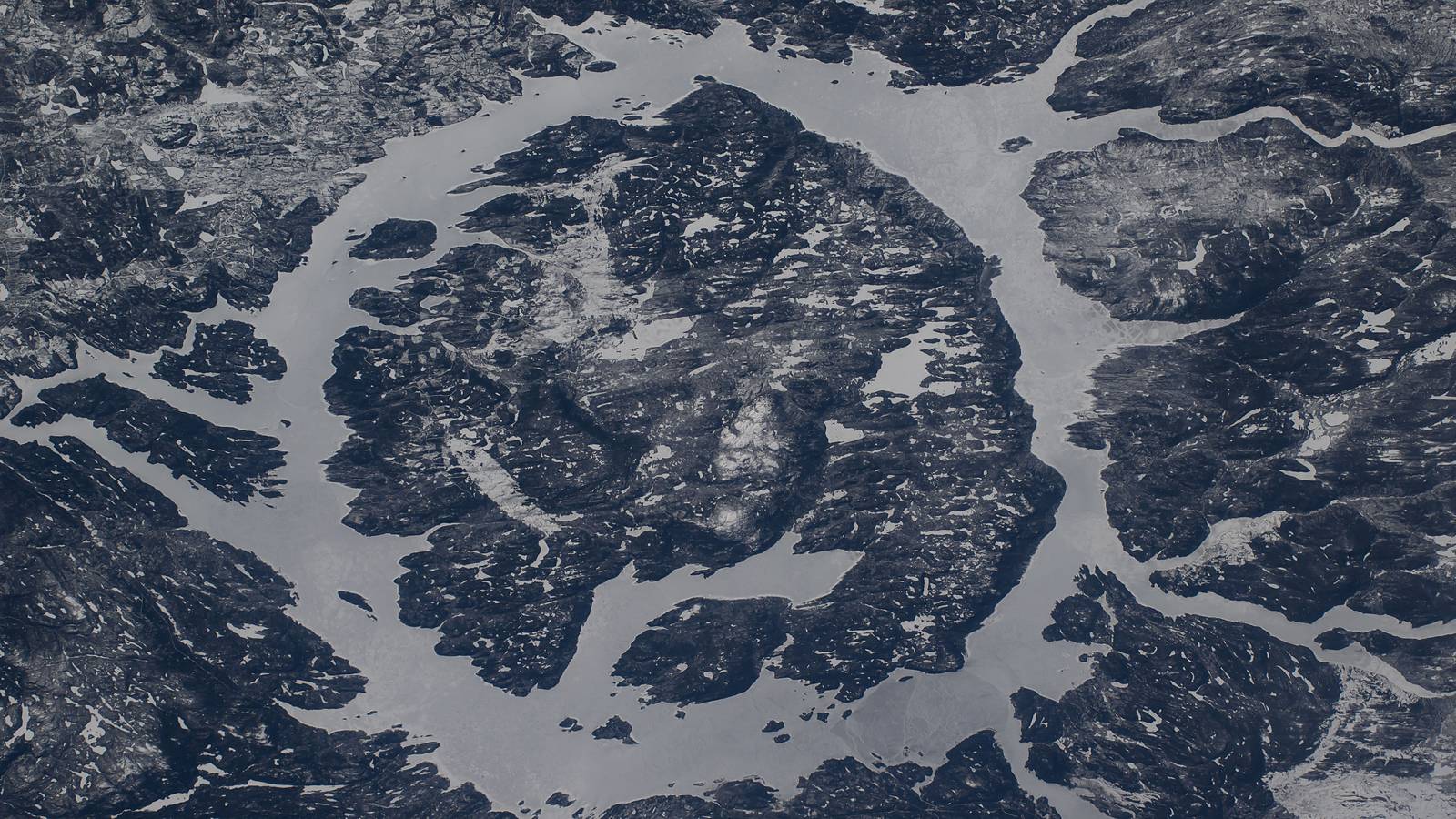
Manicouagan (Quebec, Canada)
A ring of water about 70 km across, visible from space and nicknamed “the eye of Quebec”. It occupies a crater about a hundred kilometres wide, dug about 214 million years ago.
Ries (Germany)
A 24 km basin in Bavaria, 14.8 million years old, at the centre of which the town of Nördlingen was built. Its church is made of suevite, an impact rock containing tiny diamonds. This impact also gave rise to moldavite.
And also
Sudbury (Canada): about 1.85 billion years old, its rocks host major nickel mines;
Wolfe Creek (Australia): a crater of nearly 900 m, very well preserved in the desert;
Pingualuit (Quebec): a 3.4 km crater filled by a lake of exceptional purity;
Kamil (Egypt): only 45 m, but among the youngest and best preserved; see our article on Gebel Kamil.
And in France: the Rochechouart impact structure
About 200 million years ago, an asteroid struck the north-west of the Massif Central, between Haute-Vienne and Charente. The crater, several tens of kilometres wide, has been erased by erosion, but its crushed and melted rocks, the impact breccias, still crop out. Local people long used them as building stone, right up to the Gallo-Roman baths of Chassenon. The site is protected as a national nature reserve, and a museum space is dedicated to it in Rochechouart. For the meteorites themselves, see our article on meteorites that fell in France.
Craters… and meteorites
For large craters, the asteroid was almost entirely vaporised. But small recent craters have yielded their meteorite: Canyon Diablo for Meteor Crater, Gebel Kamil for the Kamil crater, or Campo del Cielo in Argentina, where a field of small craters yielded tonnes of iron. Owning a fragment of these meteorites means keeping a witness to the impact.
Frequently asked questions
How many meteorite craters are there on Earth?
About 200 confirmed impact structures. Many others have been erased by erosion or plate tectonics, or are covered by the oceans.
What is the largest known meteorite crater?
Vredefort, in South Africa: it originally measured 250 to 300 km across, about 2 billion years ago.
Is there a meteorite crater in France?
Yes: the Rochechouart-Chassenon impact structure, between Haute-Vienne and Charente, about 200 million years old. The crater has been erased, but the impact rocks are visible.
Can you visit Meteor Crater?
Yes. This 1.2 km crater in Arizona has a visitor centre and viewpoints along its rim.
About 200 meteorite craters are known on Earth. The most impressive are Meteor Crater in Arizona, perfectly preserved; Vredefort in South Africa, the largest known; Chicxulub in Mexico, linked to the end of the dinosaurs; and Manicouagan in Quebec. France has one too: the Rochechouart impact structure, in the Limousin.
If you think you have found a meteorite, start with a few simple tests (magnet, weight, crust, no bubbles), without cleaning or breaking it. Photograph it, note the exact location, then contact the Vigie-Ciel programme or the French National Museum of Natural History. In France, it belongs in principle to the landowner.
66 million years ago, an asteroid about ten kilometres across struck the Yucatán Peninsula in Mexico, digging the Chicxulub crater, some 180 km wide. The impact triggered a global climate upheaval that wiped out the non-avian dinosaurs and about three quarters of living species.
To provide the best possible experience, we use technologies such as cookies to store and/or access information on devices. Consent to these technologies will enable us to process data such as browsing behaviour or unique identifiers on this website. Failure to give consent, or withdrawal of consent, may adversely affect certain features and functions.
Functional
Always active
Storage or technical access is strictly necessary for the legitimate interest of enabling the use of a specific service explicitly requested by the subscriber or user, or for the sole purpose of transmitting a communication over an electronic communications network.
Preferences
Storage or technical access is necessary for the legitimate interest of storing preferences that are not requested by the subscriber or user.
Stats
Storage or technical access used exclusively for statistical purposes. Storage or technical access used exclusively for anonymous statistical purposes. In the absence of a court order, voluntary cooperation from your internet service provider or additional records from a third party, information stored or retrieved for this purpose alone cannot generally be used to identify you.
Marketing
Storage or technical access is required to create user profiles for the purpose of sending adverts, or to track the user across a website or across several websites with similar marketing purposes.