The largest meteorite in the world is Hoba, in Namibia: a block of iron weighing more than 60 tonnes, discovered in 1920 and never moved since. Next come Ahnighito (Cape York, Greenland, nearly 31 tonnes), two blocks of Campo del Cielo in Argentina (30.8 and 28.8 tonnes) and Armanty, a fragment of the Chinese Aletai meteorite (28 tonnes).
Most meteorites would fit in one hand. A few weigh as much as a loaded lorry. These giants almost all have two things in common: they are made of iron, and they were often discovered by chance. Here is the ranking of the largest known meteorites, and their stories.
The giants ranked
Meteorite
Country
Mass
Discovery
Hoba
Namibia
over 60 t
1920
Cape York (Ahnighito)
Greenland
30.9 t
known to the Inuit, taken away in 1897
Campo del Cielo (Gancedo)
Argentina
30.8 t
2016
Campo del Cielo (El Chaco)
Argentina
28.8 t
1969
Aletai (Armanty)
China
28 t
1898
Bacubirito
Mexico
22 t
1863
Mbosi
Tanzania
16 t
1930
Willamette
United States
15.5 t
1902
All are iron meteorites. The masses given refer to the largest known block of each meteorite; several, such as Campo del Cielo or Aletai, have yielded many other fragments.
Hoba, the giant that was never moved
In 1920, a farmer in the Grootfontein region of Namibia struck a metal obstacle with his plough. He had just found the largest known meteorite: a slab of iron about 2.7 by 2.7 metres and nearly a metre thick. Too heavy to transport, it has stayed where it fell. Declared a national monument, it is now surrounded by a small stone amphitheatre where visitors come to touch it.
Hoba is an ataxite, an iron meteorite very rich in nickel (about 16%). A mystery: it left no crater. Its flattened shape is thought to have slowed it down so much in the atmosphere that it reached the ground at a relatively low speed.
Ahnighito, the Inuit iron
In north-western Greenland, the Inuit had known for centuries about three blocks of iron, which they called “the tent”, “the woman” and “the dog”. They chipped off flakes to make blades and harpoon tips: the only metal available in a region with no usable ore. In 1897, the explorer Robert Peary took the largest, Ahnighito, to New York. It is still on display at the American Museum of Natural History, supported by pillars that go down to Manhattan’s bedrock.
Campo del Cielo, a field of giants
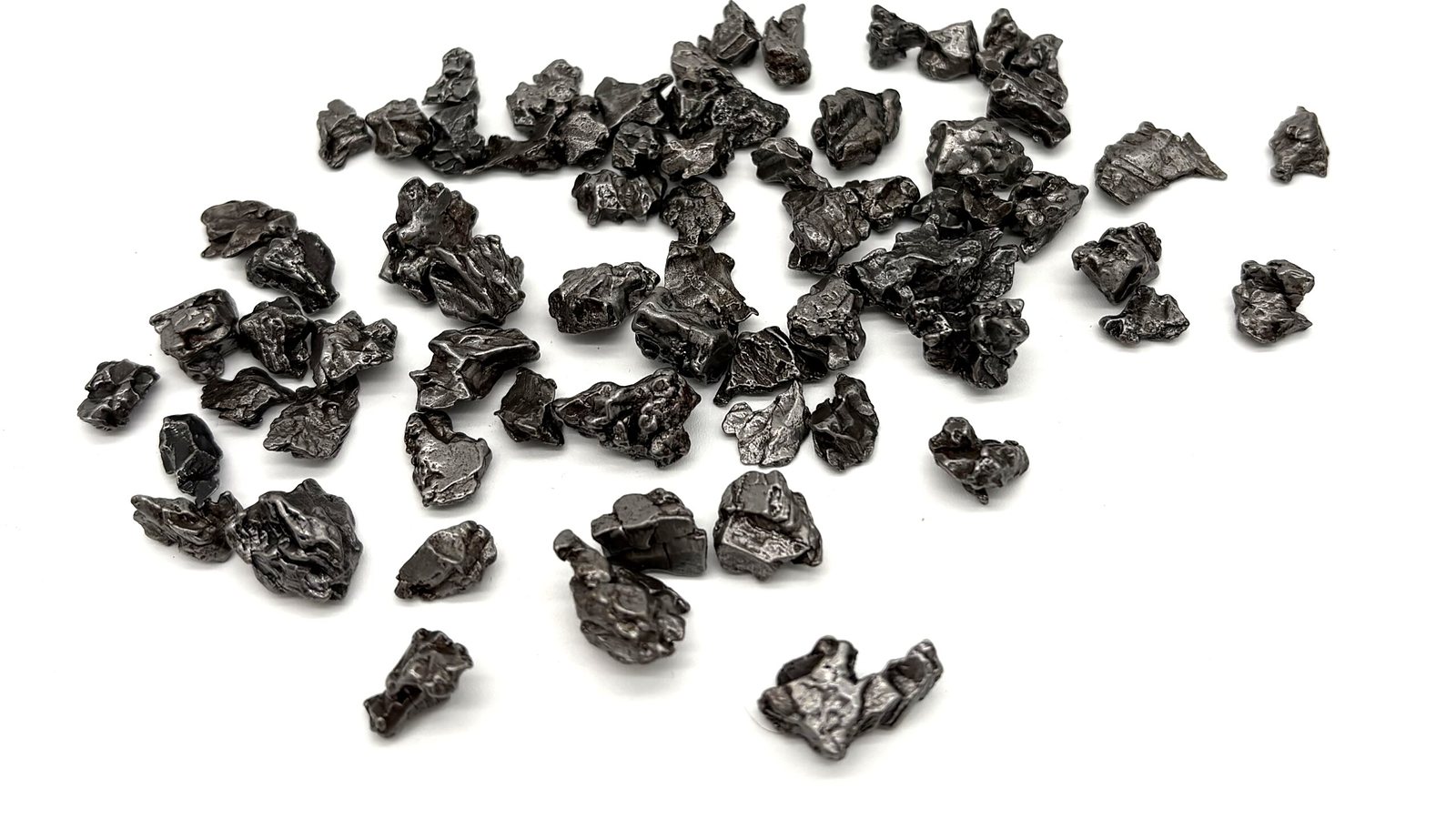
In Argentina’s Chaco province, a field of small craters bears witness to a fall about 4,000 years ago. The Spanish heard of it as early as 1576. Since then, tonnes of fragments have been found there, including two giants: El Chaco (28.8 tonnes), unearthed in 1969, and Gancedo (30.8 tonnes), extracted in 2016. We tell its story in our article on the Campo del Cielo meteorite.
Armanty, the giant of Asia
In China’s Xinjiang region, the Aletai meteorite has yielded a 28-tonne block, Armanty, known since 1898. Its fragments are scattered over more than 400 kilometres, one of the longest strewn fields known. Discover it in our article on the Aletai meteorite.
Why the largest are all made of iron
A stony meteorite breaks up easily as it crosses the atmosphere, then weathers and crumbles on the ground within a few thousand years. A mass of iron, dense and cohesive, better withstands both the shock of entry and the wear of time. Large stony meteorites therefore reach the ground as a shower of fragments, whereas irons can stay whole. To understand these differences, read our article on iron meteorites.
And the largest stony meteorite?
It is Jilin, which fell in China on 8 March 1976 during a spectacular meteorite shower: its largest fragment weighs about 1,770 kg. An ordinary chondrite, like the vast majority of stony meteorites.
And in France?
The largest single block found in France is the one from Caille, in the Alpes-Maritimes: 625 kg, on display at the National Museum of Natural History. But by total mass, the largest French meteorite is Saint-Aubin, in the Aube: nearly 7 tonnes of fragments, including a 477 kg block. See our articles on the Saint-Aubin meteorite and on meteorites that fell in France.
A fragment of a giant at home
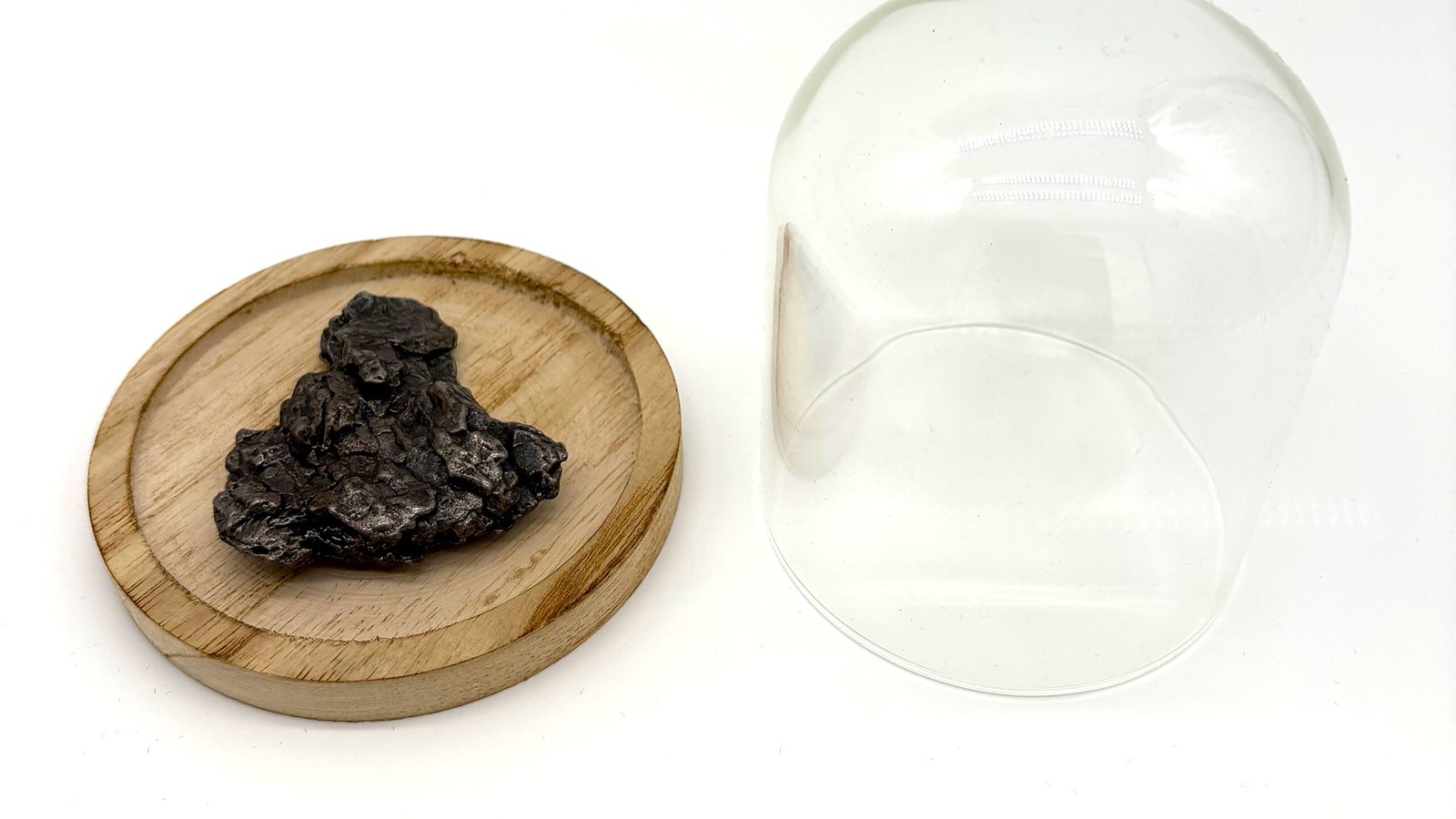
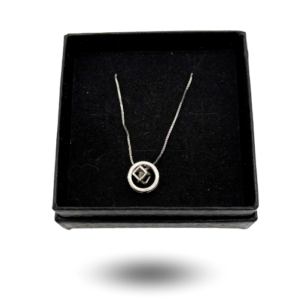
Two of the giants in this ranking, Campo del Cielo and Aletai, have yielded enough fragments for collectors and enthusiasts to own a piece: in a gift box, under a glass dome or set in jewellery.
Frequently asked questions
What is the largest meteorite in the world?
Hoba, in Namibia: a block of iron weighing more than 60 tonnes, discovered in 1920. It is also the largest known piece of natural iron on the Earth’s surface.
Where can you see a very large meteorite?
Hoba can be visited where it lies, in Namibia. Ahnighito and Willamette are on display at the American Museum of Natural History in New York. In France, the Caille meteorite is at the National Museum of Natural History in Paris.
Why did the Hoba meteorite leave no crater?
Its flat shape is thought to have slowed it down sharply in the atmosphere: it would have reached the ground at a relatively low speed, without digging a crater.
What is the largest meteorite found in France?
By total mass, Saint-Aubin (Aube), with nearly 7 tonnes of fragments. The largest single block is the one from Caille, 625 kg.
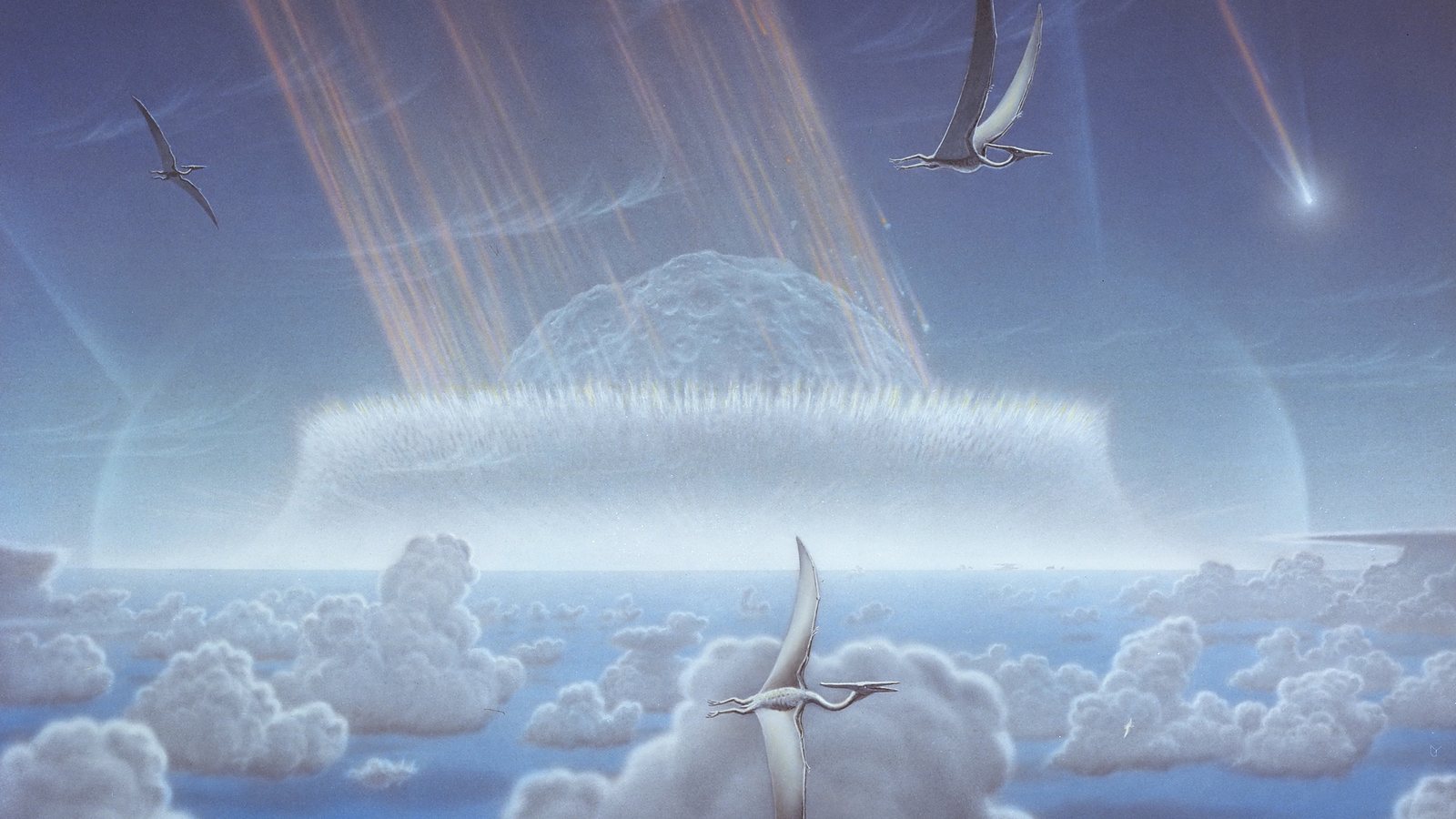
66 million years ago, an asteroid about ten kilometres across struck the Yucatán Peninsula in Mexico, digging the Chicxulub crater, some 180 km wide. The impact triggered a global climate upheaval that wiped out the non-avian dinosaurs and about three quarters of living species.
The largest meteorite in the world is Hoba, in Namibia: a block of iron weighing more than 60 tonnes, discovered in 1920 and never moved since. Next come Ahnighito (Cape York, Greenland, nearly 31 tonnes), two blocks of Campo del Cielo in Argentina (30.8 and 28.8 tonnes) and Armanty, a fragment of the Chinese Aletai meteorite (28 tonnes).
To start a meteorite collection, choose a theme (main families, famous falls, French meteorites, the Moon and Mars), begin with named, affordable pieces such as Campo del Cielo or a Saharan chondrite, keep every certificate and store your pieces dry and carefully labelled.
To provide the best possible experience, we use technologies such as cookies to store and/or access information on devices. Consent to these technologies will enable us to process data such as browsing behaviour or unique identifiers on this website. Failure to give consent, or withdrawal of consent, may adversely affect certain features and functions.
Functional
Always active
Storage or technical access is strictly necessary for the legitimate interest of enabling the use of a specific service explicitly requested by the subscriber or user, or for the sole purpose of transmitting a communication over an electronic communications network.
Preferences
Storage or technical access is necessary for the legitimate interest of storing preferences that are not requested by the subscriber or user.
Stats
Storage or technical access used exclusively for statistical purposes. Storage or technical access used exclusively for anonymous statistical purposes. In the absence of a court order, voluntary cooperation from your internet service provider or additional records from a third party, information stored or retrieved for this purpose alone cannot generally be used to identify you.
Marketing
Storage or technical access is required to create user profiles for the purpose of sending adverts, or to track the user across a website or across several websites with similar marketing purposes.